


Reaction: LOVE
Subterms
WP_Query Object
(
[query] => Array
(
[paged] => 20
[reaction] => love
)
[query_vars] => Array
(
[paged] => 20
[reaction] => love
[error] =>
[m] =>
[p] => 0
[post_parent] =>
[subpost] =>
[subpost_id] =>
[attachment] =>
[attachment_id] => 0
[name] =>
[pagename] =>
[page_id] => 0
[second] =>
[minute] =>
[hour] =>
[day] => 0
[monthnum] => 0
[year] => 0
[w] => 0
[category_name] =>
[tag] =>
[cat] =>
[tag_id] =>
[author] =>
[author_name] =>
[feed] =>
[tb] =>
[meta_key] =>
[meta_value] =>
[preview] =>
[s] =>
[sentence] =>
[title] =>
[fields] => all
[menu_order] =>
[embed] =>
[category__in] => Array
(
)
[category__not_in] => Array
(
)
[category__and] => Array
(
)
[post__in] => Array
(
)
[post__not_in] => Array
(
)
[post_name__in] => Array
(
)
[tag__in] => Array
(
)
[tag__not_in] => Array
(
)
[tag__and] => Array
(
)
[tag_slug__in] => Array
(
)
[tag_slug__and] => Array
(
)
[post_parent__in] => Array
(
)
[post_parent__not_in] => Array
(
)
[author__in] => Array
(
)
[author__not_in] => Array
(
)
[search_columns] => Array
(
)
[post_type] => Array
(
[0] => post
[1] => snax_quiz
[2] => snax_poll
)
[orderby] => date
[order] => DESC
[meta_query] => Array
(
[0] => Array
(
[key] => _whp_hide_on_archive
[compare] => NOT EXISTS
)
)
[ignore_sticky_posts] =>
[suppress_filters] =>
[cache_results] => 1
[update_post_term_cache] => 1
[update_menu_item_cache] =>
[lazy_load_term_meta] => 1
[update_post_meta_cache] => 1
[posts_per_page] => 36
[nopaging] =>
[comments_per_page] => 40
[no_found_rows] =>
[taxonomy] => reaction
[term] => love
[plugin_required_notice_slot_id] => Before content theme area
)
[tax_query] => WP_Tax_Query Object
(
[queries] => Array
(
[0] => Array
(
[taxonomy] => reaction
[terms] => Array
(
[0] => love
)
[field] => slug
[operator] => IN
[include_children] => 1
)
)
[relation] => AND
[table_aliases:protected] => Array
(
[0] => wpsu_term_relationships
)
[queried_terms] => Array
(
[reaction] => Array
(
[terms] => Array
(
[0] => love
)
[field] => slug
)
)
[primary_table] => wpsu_posts
[primary_id_column] => ID
)
[meta_query] => WP_Meta_Query Object
(
[queries] => Array
(
[0] => Array
(
[key] => _whp_hide_on_archive
[compare] => NOT EXISTS
)
[relation] => OR
)
[relation] => AND
[meta_table] => wpsu_postmeta
[meta_id_column] => post_id
[primary_table] => wpsu_posts
[primary_id_column] => ID
[table_aliases:protected] => Array
(
[0] => wpsu_postmeta
)
[clauses:protected] => Array
(
[wpsu_postmeta] => Array
(
[key] => _whp_hide_on_archive
[compare] => NOT EXISTS
[compare_key] => =
[alias] => wpsu_postmeta
[cast] => CHAR
)
)
[has_or_relation:protected] =>
)
[date_query] =>
[queried_object] => WP_Term Object
(
[term_id] => 561
[name] => LOVE
[slug] => love
[term_group] => 0
[term_taxonomy_id] => 561
[taxonomy] => reaction
[description] =>
[parent] => 0
[count] => 715
[filter] => raw
)
[queried_object_id] => 561
[request] => SELECT SQL_CALC_FOUND_ROWS wpsu_posts.ID
FROM wpsu_posts LEFT JOIN wpsu_term_relationships ON (wpsu_posts.ID = wpsu_term_relationships.object_id) LEFT JOIN wpsu_postmeta ON ( wpsu_posts.ID = wpsu_postmeta.post_id AND wpsu_postmeta.meta_key = '_whp_hide_on_archive' )
WHERE 1=1 AND (
wpsu_term_relationships.term_taxonomy_id IN (561)
) AND (
wpsu_postmeta.post_id IS NULL
) AND ((wpsu_posts.post_type = 'post' AND (wpsu_posts.post_status = 'publish' OR wpsu_posts.post_status = 'acf-disabled')) OR (wpsu_posts.post_type = 'snax_poll' AND (wpsu_posts.post_status = 'publish' OR wpsu_posts.post_status = 'acf-disabled')) OR (wpsu_posts.post_type = 'snax_quiz' AND (wpsu_posts.post_status = 'publish' OR wpsu_posts.post_status = 'acf-disabled')))
GROUP BY wpsu_posts.ID
ORDER BY wpsu_posts.post_date DESC
LIMIT 684, 36
[posts] => Array
(
[0] => WP_Post Object
(
[ID] => 2509
[post_author] => 12
[post_date] => 2016-06-10 10:46:20
[post_date_gmt] => 2016-06-10 14:46:20
[post_content] => Actors are never short on collecting advice, whether it’s from a fellow actor, teacher, director, your hairdresser, plumber, that customer that only left 10%, or your Aunt Claire; “I just love that Julia Roberts, you should get her agent to represent you.” (Thanks, Aunt Claire)... you get the idea. But a lot of the advice we receive is about the craft, how to get an agent, whose workshop is really hot, blah, blah, blah. What about how to thrive as an artist? How to balance your life? Be an actor people want to work with again? How to keep your soul alive? Or how to stay fresh?
 Jane Addams 1926[/caption]
Jane Addams (1860-1935), famous to most Americans as a leader in social reform, created the Hull House as a social settlement to provide wrap-around social services for the poor or Chicago in the late 1800s. According to the Hull House Museum, not only did the settlement provide “kindergarten and day care facilities for the children of working mothers; an employment bureau; an art gallery; libraries; English and citizenship classes,” but it was a “cultural center with music, art, and theater offerings.” Jane Addams was a precursor who embraced the concepts underlying the Little Theatre Movement, and developed a theatre as a critical part of her community. Wilfred R.Cleary, a frequent actor in the Hull House Players as far back as 1933, says the theatre began “enriching the lives of neighborhood audiences under the inspired leadership of Jane Addams” as early as 1889. Stuart J. Hecht, in his scholarly article, says that Chicago’s Hull House Theatre “was developed specifically to combat the corrupting influences of urban tenement life.” In other words, the arts component to the settlement was “a safe haven and a place where the immigrants living on Chicago's Near West Side could find companionship and support and the assistance they needed for coping with the modern city” (Hull House Museum).
[caption id="attachment_2694" align="alignright" width="350"]
Jane Addams 1926[/caption]
Jane Addams (1860-1935), famous to most Americans as a leader in social reform, created the Hull House as a social settlement to provide wrap-around social services for the poor or Chicago in the late 1800s. According to the Hull House Museum, not only did the settlement provide “kindergarten and day care facilities for the children of working mothers; an employment bureau; an art gallery; libraries; English and citizenship classes,” but it was a “cultural center with music, art, and theater offerings.” Jane Addams was a precursor who embraced the concepts underlying the Little Theatre Movement, and developed a theatre as a critical part of her community. Wilfred R.Cleary, a frequent actor in the Hull House Players as far back as 1933, says the theatre began “enriching the lives of neighborhood audiences under the inspired leadership of Jane Addams” as early as 1889. Stuart J. Hecht, in his scholarly article, says that Chicago’s Hull House Theatre “was developed specifically to combat the corrupting influences of urban tenement life.” In other words, the arts component to the settlement was “a safe haven and a place where the immigrants living on Chicago's Near West Side could find companionship and support and the assistance they needed for coping with the modern city” (Hull House Museum).
[caption id="attachment_2694" align="alignright" width="350"]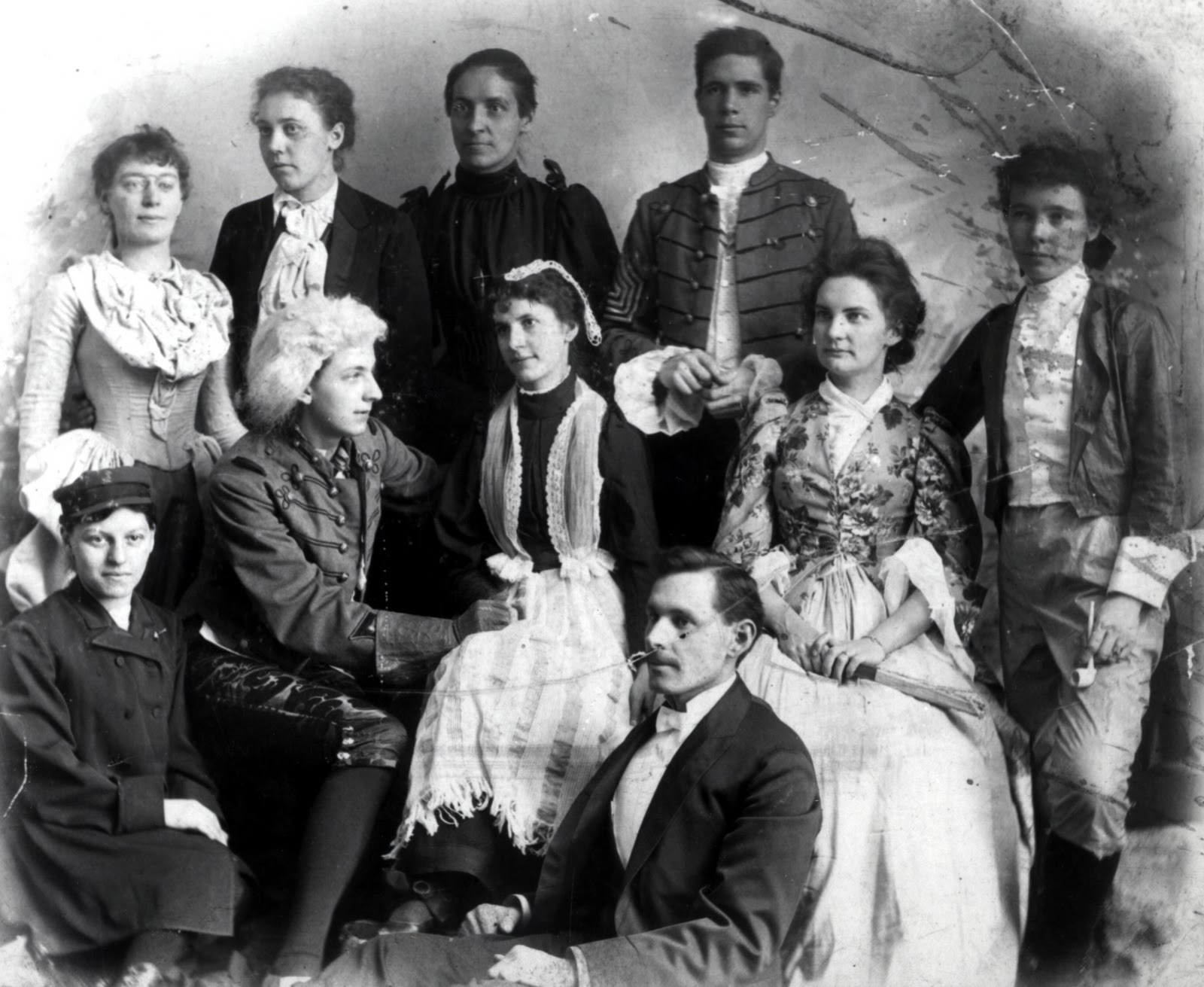 The Hull House Players[/caption]
During its height, the Hull House Players were well-known nationally and even internationally, and they toured in major cities in the U.S. Cleary says their work was “ambitious and adventuresome, with work by celebrated dramatists as well as new, yet-to- be-proven plays.” What we still see is that the major functions of community and regional theatre today are precisely to enrich the full community, to provide a stage for audiences to see new works, ground-breaking works, or smaller venue works that everyday audiences wouldn’t have the chance to see otherwise. They usually do this at prices more affordable to all, and they commonly go out of their way to offer free showings or enrichment activities for students, senior citizens, and those needing special services. Susan Glaspell (1876-1948) was a famous and prolific playwright, actress, and novelist known as a pioneer feminist writer. She wrote the acclaimed play Trifles. Glaspell, her husband George Cram Cook, and their theatre friends were part of an avante-garde writers and artists group and eventually, she and her husband founded the Province Town Players in 1915, recognized as the first official Little Theatre. According to scholar Martha Carpentier, this was "the most important, innovative moment in American theatre," in part for “launching the career of Eugene O'Neill and building an audience for American playwrights.” George Cook described the aim of the group: “to give American playwrights a chance to work out their ideas in freedom. "The Players intended to create a group where playwrights could write and produce their own productions “without submitting to the commercial managers' interpretation of public taste.” After two years, they moved the Players to New York City and began performing there, where they were part of a Bohemian spirit that ultimately became the heart of Greenwich Village. They were associated with groundbreaking American writers like Upton Sinclair, Edna St. Vincent Millay, Wallace Stevens; and Robert Edmund Jones came out of Glaspell’s theatre. Eleanor J. Gainor says that the Little Theatre Movement was a direct response to the “tepid” commercial theatre of the day, and provided an outlet for stories of social significance. In many regional theatres today, this is still a primary focus in works they choose to produce.
[caption id="attachment_2698" align="alignleft" width="248"]
The Hull House Players[/caption]
During its height, the Hull House Players were well-known nationally and even internationally, and they toured in major cities in the U.S. Cleary says their work was “ambitious and adventuresome, with work by celebrated dramatists as well as new, yet-to- be-proven plays.” What we still see is that the major functions of community and regional theatre today are precisely to enrich the full community, to provide a stage for audiences to see new works, ground-breaking works, or smaller venue works that everyday audiences wouldn’t have the chance to see otherwise. They usually do this at prices more affordable to all, and they commonly go out of their way to offer free showings or enrichment activities for students, senior citizens, and those needing special services. Susan Glaspell (1876-1948) was a famous and prolific playwright, actress, and novelist known as a pioneer feminist writer. She wrote the acclaimed play Trifles. Glaspell, her husband George Cram Cook, and their theatre friends were part of an avante-garde writers and artists group and eventually, she and her husband founded the Province Town Players in 1915, recognized as the first official Little Theatre. According to scholar Martha Carpentier, this was "the most important, innovative moment in American theatre," in part for “launching the career of Eugene O'Neill and building an audience for American playwrights.” George Cook described the aim of the group: “to give American playwrights a chance to work out their ideas in freedom. "The Players intended to create a group where playwrights could write and produce their own productions “without submitting to the commercial managers' interpretation of public taste.” After two years, they moved the Players to New York City and began performing there, where they were part of a Bohemian spirit that ultimately became the heart of Greenwich Village. They were associated with groundbreaking American writers like Upton Sinclair, Edna St. Vincent Millay, Wallace Stevens; and Robert Edmund Jones came out of Glaspell’s theatre. Eleanor J. Gainor says that the Little Theatre Movement was a direct response to the “tepid” commercial theatre of the day, and provided an outlet for stories of social significance. In many regional theatres today, this is still a primary focus in works they choose to produce.
[caption id="attachment_2698" align="alignleft" width="248"] Viola spolin 1946[/caption]
Viola Spolin (1906-1994) trained in social work and then taught theatre classes at Hull House in the 1920s under Jane Addams. The Little Theatre Movement and its connection to communities and everyday people paired well with Spolin’s work with children and immigrants, who participated in theatrical activities as both a method of rehabilitation and as creative expression. Spolin became the originator of Theatre Games, and founded the first improv acting company in America, The Compass Players. Chicago has a well-known theatre scene, particularly in improvisation and comedy, like the Second City group, which Spolin also founded, and which has launched many American comedy careers—think of modern examples Jerry Stiller, Fred Willard, John Belushi, Dan Akroyd, Amy Poelher, Tina Fey and Stephen Colbert. All of this came out of the Little Theatre Movement, and it symbolizes its power for a wide cross section of people in every community to participate in the arts and be affected by the theatre.
Viola spolin 1946[/caption]
Viola Spolin (1906-1994) trained in social work and then taught theatre classes at Hull House in the 1920s under Jane Addams. The Little Theatre Movement and its connection to communities and everyday people paired well with Spolin’s work with children and immigrants, who participated in theatrical activities as both a method of rehabilitation and as creative expression. Spolin became the originator of Theatre Games, and founded the first improv acting company in America, The Compass Players. Chicago has a well-known theatre scene, particularly in improvisation and comedy, like the Second City group, which Spolin also founded, and which has launched many American comedy careers—think of modern examples Jerry Stiller, Fred Willard, John Belushi, Dan Akroyd, Amy Poelher, Tina Fey and Stephen Colbert. All of this came out of the Little Theatre Movement, and it symbolizes its power for a wide cross section of people in every community to participate in the arts and be affected by the theatre.





















 Brandom in "American Idiot"[/caption]
After his second year of college, Kalm booked the touring company of American Idiot, taking a leave of absence from his education to travel the world with the show. He returned, however, after eighteen months and graduated in May 2014. Being a strong believer in the benefits of education, Kalm continued his studies at the prestigious William Esper Studio with Bill Esper.
In January of 2015, Kalm auditioned for workshop production of American Psycho. After performing in front of the musical’s creative team, he received the news that he did not book the show. His career continued, however, until he auditioned for the show again in October of 2015. After not hearing back for months after the audition, he assumed he hadn’t booked the gig. To his surprise, the call came four months later in January informing Kalm that he would be making his Broadway debut as a standby in American Psycho.
A standby is a performer who is ready at a moment’s notice to step into the show. Though they don’t perform every night, Kalm told us how a standby’s job is truly never finished.
Kalm- “Since I do cover five different roles, the work is truly never done. I’m constantly running the show backstage and what people often forget about is that there is a whole other show happening backstage. [For instance], the dressers have their own set way of how to do quick changes with one person changing here and another there while another is running across the stage to get their costume. So you’re learning the backstage choreography as you’re solidifying the onstage choreography which is a lot of work.”
Gianluca- American Psycho is such an unconventional show, something never before seen on Broadway. What’s it like to be a part of this electrifying production?
Kalm- “For me, I always want to be working on projects like this which is why I’m so lucky to be a part of this show. When you’re pushing the envelope, there are going to be people who hate it because that’s the nature of art. But, at the same time, there are going to be people who are obsessed with it, who can’t get enough of it, who are completely fascinated by it and want to know more about it, and those are the people we are doing it for.“
Gianluca- What advice do you have for aspiring performers?
[caption id="attachment_2645" align="alignright" width="350"]
Brandom in "American Idiot"[/caption]
After his second year of college, Kalm booked the touring company of American Idiot, taking a leave of absence from his education to travel the world with the show. He returned, however, after eighteen months and graduated in May 2014. Being a strong believer in the benefits of education, Kalm continued his studies at the prestigious William Esper Studio with Bill Esper.
In January of 2015, Kalm auditioned for workshop production of American Psycho. After performing in front of the musical’s creative team, he received the news that he did not book the show. His career continued, however, until he auditioned for the show again in October of 2015. After not hearing back for months after the audition, he assumed he hadn’t booked the gig. To his surprise, the call came four months later in January informing Kalm that he would be making his Broadway debut as a standby in American Psycho.
A standby is a performer who is ready at a moment’s notice to step into the show. Though they don’t perform every night, Kalm told us how a standby’s job is truly never finished.
Kalm- “Since I do cover five different roles, the work is truly never done. I’m constantly running the show backstage and what people often forget about is that there is a whole other show happening backstage. [For instance], the dressers have their own set way of how to do quick changes with one person changing here and another there while another is running across the stage to get their costume. So you’re learning the backstage choreography as you’re solidifying the onstage choreography which is a lot of work.”
Gianluca- American Psycho is such an unconventional show, something never before seen on Broadway. What’s it like to be a part of this electrifying production?
Kalm- “For me, I always want to be working on projects like this which is why I’m so lucky to be a part of this show. When you’re pushing the envelope, there are going to be people who hate it because that’s the nature of art. But, at the same time, there are going to be people who are obsessed with it, who can’t get enough of it, who are completely fascinated by it and want to know more about it, and those are the people we are doing it for.“
Gianluca- What advice do you have for aspiring performers?
[caption id="attachment_2645" align="alignright" width="350"] Brandon with fellow American Psycho Cast Members[/caption]
Kalm- “Be fearless. Don’t be afraid to look like an idiot or sound bad or to be terrible at a scene. You do your best learning and growing when you are failing. As long as you are positive about it and pushing forward and following your dreams then everything is going to work out. And be unique. Do what YOU do and be yourself, because that’s what’s going to set you apart from the thousands of others who are trying to do the same thing as you."
Follow Brandon on Instagram @BKalm and on Twitter @BrandonKalm and make sure to catch American Psycho before it closes on June 5.
[post_title] => Broadway's Brandon Kalm On American Psycho, The Job Of A Standby, & Advice For Young Actors
[post_excerpt] =>
[post_status] => publish
[comment_status] => open
[ping_status] => open
[post_password] =>
[post_name] => broadways-brandon-kalm-on-american-psycho-job-of-a-stand-by
[to_ping] =>
[pinged] =>
[post_modified] => 2016-06-02 10:05:32
[post_modified_gmt] => 2016-06-02 14:05:32
[post_content_filtered] =>
[post_parent] => 0
[guid] => http://theatrenerds.com/?p=2632
[menu_order] => 0
[post_type] => post
[post_mime_type] =>
[comment_count] => 0
[filter] => raw
)
[6] => WP_Post Object
(
[ID] => 2358
[post_author] => 9
[post_date] => 2016-05-31 12:11:05
[post_date_gmt] => 2016-05-31 16:11:05
[post_content] => Every theatre department is unique in its own way, but there seem to be the same type of people in each group. Here is a list of the 18 personalities that comprise pretty much every theatre department.
Brandon with fellow American Psycho Cast Members[/caption]
Kalm- “Be fearless. Don’t be afraid to look like an idiot or sound bad or to be terrible at a scene. You do your best learning and growing when you are failing. As long as you are positive about it and pushing forward and following your dreams then everything is going to work out. And be unique. Do what YOU do and be yourself, because that’s what’s going to set you apart from the thousands of others who are trying to do the same thing as you."
Follow Brandon on Instagram @BKalm and on Twitter @BrandonKalm and make sure to catch American Psycho before it closes on June 5.
[post_title] => Broadway's Brandon Kalm On American Psycho, The Job Of A Standby, & Advice For Young Actors
[post_excerpt] =>
[post_status] => publish
[comment_status] => open
[ping_status] => open
[post_password] =>
[post_name] => broadways-brandon-kalm-on-american-psycho-job-of-a-stand-by
[to_ping] =>
[pinged] =>
[post_modified] => 2016-06-02 10:05:32
[post_modified_gmt] => 2016-06-02 14:05:32
[post_content_filtered] =>
[post_parent] => 0
[guid] => http://theatrenerds.com/?p=2632
[menu_order] => 0
[post_type] => post
[post_mime_type] =>
[comment_count] => 0
[filter] => raw
)
[6] => WP_Post Object
(
[ID] => 2358
[post_author] => 9
[post_date] => 2016-05-31 12:11:05
[post_date_gmt] => 2016-05-31 16:11:05
[post_content] => Every theatre department is unique in its own way, but there seem to be the same type of people in each group. Here is a list of the 18 personalities that comprise pretty much every theatre department.
The Annoying Talent is very talented… there’s no doubt, but you kind of hate them for it. Everything comes naturally to them and it seems like they don’t have to work as hard as everybody else. They can do no wrong.
The Tech Guru can do anything… seriously. We’re not certain when they had time to learn all the stuff they know. If you turn your back for one second, they have the set built. Let’s be honest, the theater belongs to them.
The Hidden Talent is the quiet person at the back of room who never says anything until they perform… and when they perform… everyone’s jaw drops. Where did that come from? Then they’re back to their shy ways.
The Athlete thought it would always be fun to try acting. They’re not bad either! By the end of the show they’ll say, “I wish I would have done theatre sooner.” It’s always fun having half the football team in the audience because you cast the wide receiver.
The Drama is the reason we call it the “Drama Department.” When they’re not spreading rumors on Twitter and Facebook… you might hear common phrases like “She said,” “He said,” and “Let them say it to my face.”


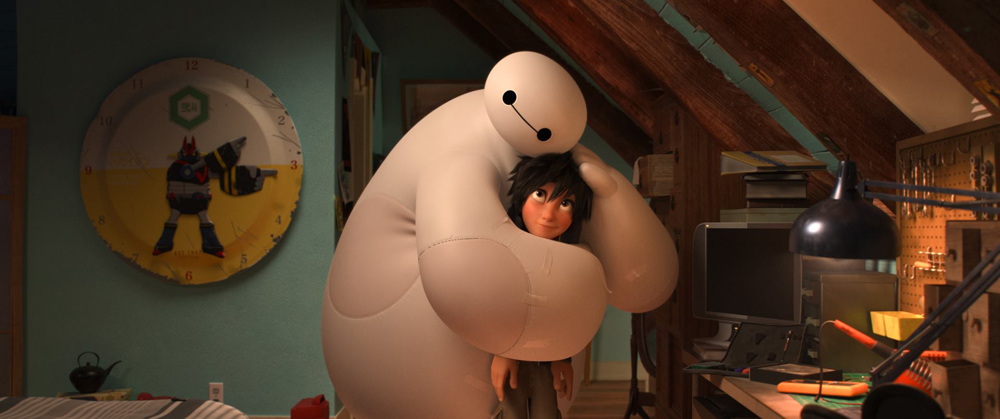
The Overachiever does everything in theatre. If ever you can’t find them… check the theatre. You often hear them joking that they should just sleep at the school… because they’re always there. The department wouldn’t function without them!


The Absent is the person who you know is in the show, but you don’t usually see them until show night. They give a whole new meaning to “Empty chairs at empty tables.” They always seem to have other commitments… allegedly.

The Critic cannot be pleased. No one is ever good enough for their taste. They always have an opinion (welcomed or unwelcomed).
The Awkward is exactly what you think. Every theatre department has that one awkward kid who is too awkward to be in a show… until you finally see them in a perfect role and then you must see them in every show! There is something mesmerizing about all that awkward!
The Misunderstood is very misunderstood. They prove how misunderstood they are by wearing elaborate makeup and clothing that you’re pretty certain they stole from the costume closet.
The Guitar Player has a guitar. The guitar player has hair that dramatically falls into their eyes. The Guitar Player has a small following of underclassmen who have never heard such genuine and honest music.
The Jokester is hilarious. They always make you laugh… even when you probably shouldn’t be laughing. They’re a child at heart and probably will be for the rest of their life.

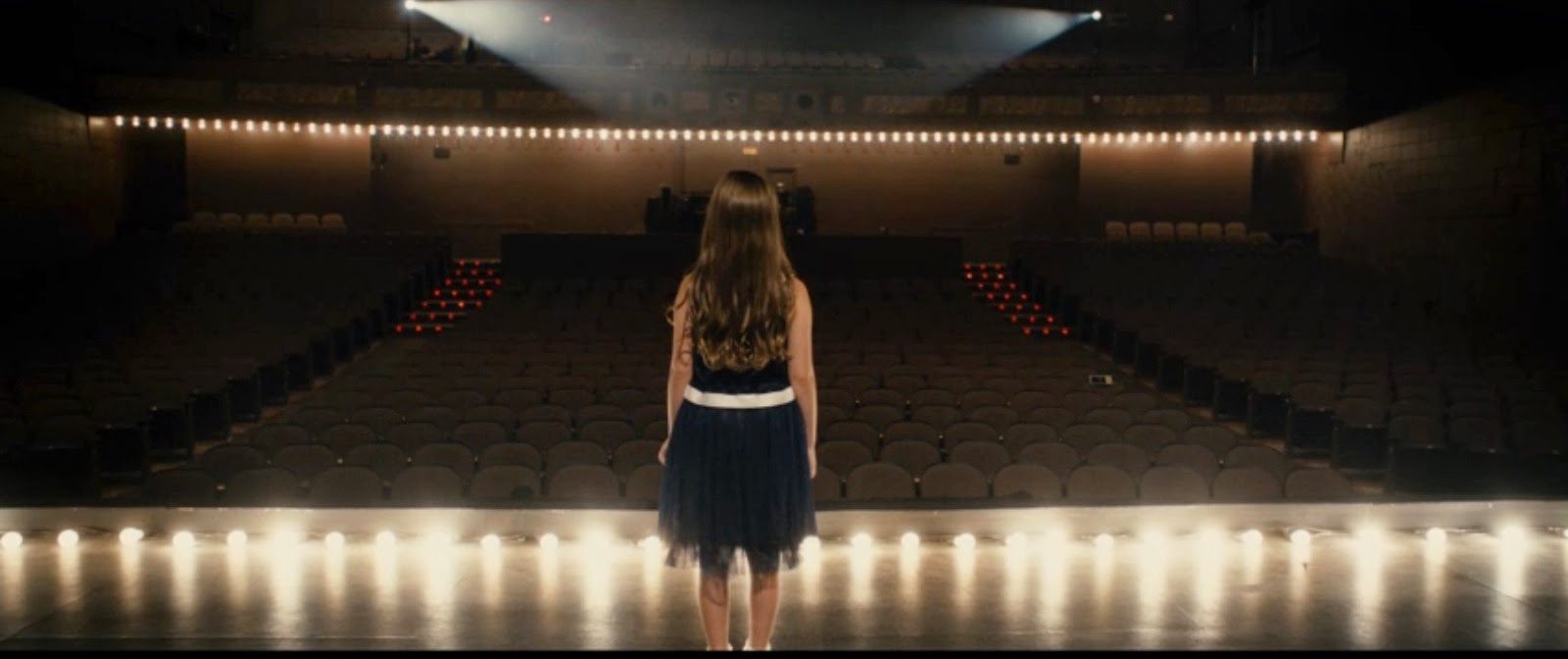 To command a stage, and deliver your lines or actions takes guts. The more we practice those skills, the more confident we become in trying new things, taking risks, and gaining personal confidence on the other stages in our lives. This kind of confidence definitely carries over into work, home, school, & anywhere we need to step out of our comfort zone or “perform.”
 Being able to approach a problem from a different angle, or with unique abilities is truly a life skill. Thinking on your feet. Asking questions. Taking notes, adapting movement, adjusting inflection, and trying everything again in a fresh way makes us more creative when we’re tackling other areas in life. It makes us limber mentally and emotionally, and gives us options onstage and off.
 Much of theatre revolves around the script, choices on stage, character motivations, and human interactions. We delve into the human condition and strive to understand others through their own lenses. Human behavior and psychology are central to crafting our characters and portraying their social interactions onstage. We also read many scripts, and experience different historical eras, dance styles, and musical styles. We learn to sympathize, empathize and understand humanity everyday, and this helps us when we interact in the real world.
 Deadlines, professionalism and quality control are integral parts to every production, both on and off stage. The perseverance required by the theatre makes us stronger people in our personal lives. Opening Night never goes away, and every audience is new, so our practice and performance has to remain solid for the run. The world needs and expects resilient people who step up and make it happen. In other words, “The show must go on!”
 The very nature of theatre is people working towards a common goal, which is telling a story in a certain way. You can’t escape the team nature of theatre (and sometimes there’s drama that should have been left on the stage), but teamwork is also one of the things we love best about performance! The social fun, interaction, and energy of the cast and crew make those inevitable difficult times more than worth it, and this teaches us to push through problems and conflicts by seeing the big picture, which is the team goal.
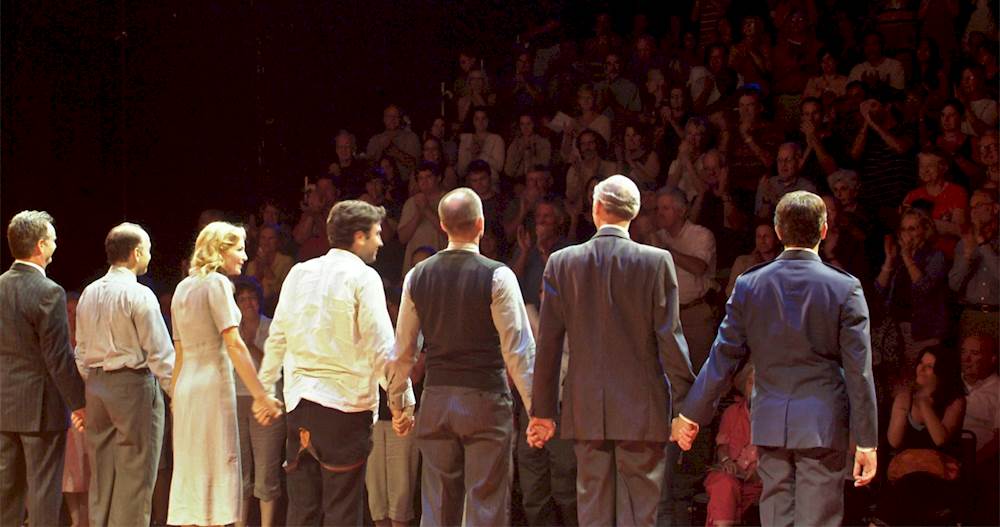 Live audiences! Technical snafus! Lack of sleep! And yet, we learn to thrive under pressure, when needed, by performing. We learn that challenges often bring out the best in us, and we learn that nervous “butterflies” are a sign of life and energy that we can harness. We start to appreciate the adrenaline, the anticipation, and the rush of the stage. We become stronger people by surviving the obstacles and moving forward every day in the theatre.
 Passion for the scripts and collaboration with a team that you care about is deeply fun for those who choose theatre. We learn to bring texts to life. We learn to live in the moment. We learn to improvise when necessary. We inhabit our characters each night on stage. We dance and sing, and call cues, and create something. We face setbacks, but if it wasn’t sheer enjoyment to create and make and perform, we wouldn’t keep choosing this highly demanding work. We find our passion in the theatre. And at the end of every exhausting day, we push forward, for the love of our craft.

















 [post_title] => The Top 19 Roles Theatre Nerds Want To Play On Stage
[post_excerpt] =>
[post_status] => publish
[comment_status] => open
[ping_status] => open
[post_password] =>
[post_name] => top-19-roles-theatre-nerds-want-to-play
[to_ping] =>
[pinged] =>
[post_modified] => 2022-07-01 11:00:47
[post_modified_gmt] => 2022-07-01 15:00:47
[post_content_filtered] =>
[post_parent] => 0
[guid] => http://theatrenerds.com/?p=2261
[menu_order] => 0
[post_type] => post
[post_mime_type] =>
[comment_count] => 55
[filter] => raw
)
[13] => WP_Post Object
(
[ID] => 2234
[post_author] => 9
[post_date] => 2016-05-18 10:00:26
[post_date_gmt] => 2016-05-18 10:00:26
[post_content] => If you’re like me… you probably laughed at the title of this article and then cried on the inside while considering the harsh realities. When I was an acting major at the University of Northern Colorado I used to joke that the final class in our program should be a bartending class. We can just call it THEA 450. I mean… so many people end up going into the service industry, why not? Let’s be honest, we’re just in these jobs to pay the bills. So here comes the big question…
[post_title] => The Top 19 Roles Theatre Nerds Want To Play On Stage
[post_excerpt] =>
[post_status] => publish
[comment_status] => open
[ping_status] => open
[post_password] =>
[post_name] => top-19-roles-theatre-nerds-want-to-play
[to_ping] =>
[pinged] =>
[post_modified] => 2022-07-01 11:00:47
[post_modified_gmt] => 2022-07-01 15:00:47
[post_content_filtered] =>
[post_parent] => 0
[guid] => http://theatrenerds.com/?p=2261
[menu_order] => 0
[post_type] => post
[post_mime_type] =>
[comment_count] => 55
[filter] => raw
)
[13] => WP_Post Object
(
[ID] => 2234
[post_author] => 9
[post_date] => 2016-05-18 10:00:26
[post_date_gmt] => 2016-05-18 10:00:26
[post_content] => If you’re like me… you probably laughed at the title of this article and then cried on the inside while considering the harsh realities. When I was an acting major at the University of Northern Colorado I used to joke that the final class in our program should be a bartending class. We can just call it THEA 450. I mean… so many people end up going into the service industry, why not? Let’s be honest, we’re just in these jobs to pay the bills. So here comes the big question…
 I know this article is about alternate options, but there’s a reason why so many actors are drawn to these jobs! Work hours are flexible, multiple people can usually cover your shift, and there are restaurants and bars everywhere! Plus, walking away from each shift with cash tips… not so bad!






 This one seems like a no-brainer, but you’d be surprised! Actors sometimes forget that there are other jobs in the theatre world than just acting. Working in a theatre keeps you in the industry and keeps you connected to other people. We’ve all heard the saying, “It’s not what you know, but who you know.” Make sure you know the right people. Any job in a theatre is going to help you get closer and closer to making the right connections and landing your dream role! There’s no doubt about it, you’re a performer first. Performing just doesn’t always pay the bills, so until it does, consider these options while you pursue your dreams.







 Credit: charliefranklin.net[/caption]
Charlie began performing at a very young age, inspired by his mother Lisa Franklin, a performer and voice teacher herself. Along with his brother and two sisters, Franklin participated in many community and regional theatre productions growing up, including at Park Playhouse and the New York State Theatre Institute in Albany, New York. He then went on to pursue a BFA in Musical Theatre at Pace University, graduating in 2014.
During his senior year of college, Franklin was cast in the short lived yet acclaimed Broadway musical The Bridges of Madison County, and, as he tells us, the moment he got the call from his agent is a moment he will never forget.
Franklin - “I had just gotten back from the final callback when I got the call, and I was in class at Pace University. It was one of those feelings that I can never describe, but I saved the voicemail and every time I find myself scrolling past it, I click on it and get that feeling all over again.”
Upon graduation and closing the company of The Bridges of Madison County, Franklin went on to perform in The Lord of the Flies at the Denver Center and in Parade at Lincoln Center. He joined the cast of The Book of Mormon in December of 2014.
TheatreNerds - What was the audition process like for The Book of Mormon?
Franklin - “Well, when I first went in for the show it was for the first national tour a while back. And it
was pretty standard - singing, sides, and dance - but then I was told I was still a little green. I went in again right after "Bridges" closed, summer of '14. I didn't hear anything so just assumed I didn't get it. But I guess I stayed in the pile because out of the blue I got a call one morning, and my agent yelled ‘Get dressed, and head to midtown because you start rehearsals for The Book of Mormon on Broadway today!’ It was pretty nuts.”
TheatreNerds - What is your daily routine like on a one show day?
[caption id="attachment_1957" align="alignright" width="225"]
Credit: charliefranklin.net[/caption]
Charlie began performing at a very young age, inspired by his mother Lisa Franklin, a performer and voice teacher herself. Along with his brother and two sisters, Franklin participated in many community and regional theatre productions growing up, including at Park Playhouse and the New York State Theatre Institute in Albany, New York. He then went on to pursue a BFA in Musical Theatre at Pace University, graduating in 2014.
During his senior year of college, Franklin was cast in the short lived yet acclaimed Broadway musical The Bridges of Madison County, and, as he tells us, the moment he got the call from his agent is a moment he will never forget.
Franklin - “I had just gotten back from the final callback when I got the call, and I was in class at Pace University. It was one of those feelings that I can never describe, but I saved the voicemail and every time I find myself scrolling past it, I click on it and get that feeling all over again.”
Upon graduation and closing the company of The Bridges of Madison County, Franklin went on to perform in The Lord of the Flies at the Denver Center and in Parade at Lincoln Center. He joined the cast of The Book of Mormon in December of 2014.
TheatreNerds - What was the audition process like for The Book of Mormon?
Franklin - “Well, when I first went in for the show it was for the first national tour a while back. And it
was pretty standard - singing, sides, and dance - but then I was told I was still a little green. I went in again right after "Bridges" closed, summer of '14. I didn't hear anything so just assumed I didn't get it. But I guess I stayed in the pile because out of the blue I got a call one morning, and my agent yelled ‘Get dressed, and head to midtown because you start rehearsals for The Book of Mormon on Broadway today!’ It was pretty nuts.”
TheatreNerds - What is your daily routine like on a one show day?
[caption id="attachment_1957" align="alignright" width="225"] "Elder" Charlie[/caption]
Franklin - “I try to wake up at a decent hour. So let's say 9am. Most of the time I have SOMETHING planned so I don't just sit around like a bum, whether it's coffee with a friend, writing, or an audition. But I always eat breakfast and drink coffee pretty much first thing. I try to only have one coffee a day but that never really works out. And it really varies from there. Before my call I like to, at some point, drink a green juice and hit the gym. Before the show, I do some sort of vocal warmup and stretch. Then, after the show, I go home and chill out, watch something on TV or something just to give my voice/body a cool down and some rest.”
Franklin’s schedule on two show days is quite similar, waking up a few hours before the show and making sure he is vocally and physically prepared to perform.
Franklin - “…except on Saturdays, I play Settlers of Catan with cast members between the shows. Then on Sunday nights, we go out.”
Performing eight shows a week is no doubt an extremely difficult task, taking a toll on performers both physically and emotionally. Franklin told us how he makes sure his body is in tip top shape to keep up with the rigorous performing schedule.
Franklin - “8 shows is nuts, a lot of the time, people who aren't in theatre don't realize how hard our job is. And I'm on the low part! But you have to be so healthy and careful with everything you do and eat all day every day. If I find myself at a loud restaurant or bar, I have to make sure I'm not talking too loud. I had to stop playing softball because I hurt my shoulder doing it. It's tough, but it's totally worth it and doable once you figure out a routine.”
"Elder" Charlie[/caption]
Franklin - “I try to wake up at a decent hour. So let's say 9am. Most of the time I have SOMETHING planned so I don't just sit around like a bum, whether it's coffee with a friend, writing, or an audition. But I always eat breakfast and drink coffee pretty much first thing. I try to only have one coffee a day but that never really works out. And it really varies from there. Before my call I like to, at some point, drink a green juice and hit the gym. Before the show, I do some sort of vocal warmup and stretch. Then, after the show, I go home and chill out, watch something on TV or something just to give my voice/body a cool down and some rest.”
Franklin’s schedule on two show days is quite similar, waking up a few hours before the show and making sure he is vocally and physically prepared to perform.
Franklin - “…except on Saturdays, I play Settlers of Catan with cast members between the shows. Then on Sunday nights, we go out.”
Performing eight shows a week is no doubt an extremely difficult task, taking a toll on performers both physically and emotionally. Franklin told us how he makes sure his body is in tip top shape to keep up with the rigorous performing schedule.
Franklin - “8 shows is nuts, a lot of the time, people who aren't in theatre don't realize how hard our job is. And I'm on the low part! But you have to be so healthy and careful with everything you do and eat all day every day. If I find myself at a loud restaurant or bar, I have to make sure I'm not talking too loud. I had to stop playing softball because I hurt my shoulder doing it. It's tough, but it's totally worth it and doable once you figure out a routine.”
 Charlie & Cast supporting Broadway Cares[/caption]
Franklin left us with his advice for aspiring performers.
Franklin - “I always say this, but it's so important: Be the best you that you can be. Try not to say anything bad about anyone. It will get around to them. And it can completely ruin your career. To be in this business, or really any business, you have to be a good person. My program director at Pace's motto was ‘don’t be an @$$hole.’ It's one of the most important thing, if not THEE most important thing.”
Learn more about Charlie: www.charliefranklin.net
Charlie on Twitter & Instagram: @Chazafranklin
Charlie & Cast supporting Broadway Cares[/caption]
Franklin left us with his advice for aspiring performers.
Franklin - “I always say this, but it's so important: Be the best you that you can be. Try not to say anything bad about anyone. It will get around to them. And it can completely ruin your career. To be in this business, or really any business, you have to be a good person. My program director at Pace's motto was ‘don’t be an @$$hole.’ It's one of the most important thing, if not THEE most important thing.”
Learn more about Charlie: www.charliefranklin.net
Charlie on Twitter & Instagram: @Chazafranklin
Big Thanks Charlie Franklin & Theatre Nerds Contributor Gianluca Russo [post_title] => Getting The Big Call To Broadway: Interview With The Book of Mormon's Charlie Franklin [post_excerpt] => [post_status] => publish [comment_status] => open [ping_status] => open [post_password] => [post_name] => interview-with-the-book-of-mormons-charlie-franklin [to_ping] => [pinged] => [post_modified] => 2016-05-11 08:43:52 [post_modified_gmt] => 2016-05-11 08:43:52 [post_content_filtered] => [post_parent] => 0 [guid] => http://theatrenerds.com/?p=1944 [menu_order] => 0 [post_type] => post [post_mime_type] => [comment_count] => 0 [filter] => raw ) [17] => WP_Post Object ( [ID] => 1829 [post_author] => 9 [post_date] => 2016-05-09 09:15:25 [post_date_gmt] => 2016-05-09 09:15:25 [post_content] => Warning: These are actual conversations that actual theatre educators are having with their students. Every theatre teacher wonders, “What do my students go home and tell their parents?” Hey Mom and Dad! Guess what my theatre teacher said today…


Did I mention costumes were a nightmare? I thought so.

What’s my character motivation?
Just a little too much lipstick…

Tongue Twister (the freshmen love this one) I am a mother pheasant plucker. I pluck mother pheasants. I am the best mother pheasant plucker to ever pluck a mother pheasant. Say that five times fast… and then go to the dean’s office.
I mean I’ve always wanted to play a serial killer.







 Because your microphone is still on

 When it’s all said in done… no other teacher knows you like your theatre teacher. The theatre department is like your second family.
So you might have some bizarre quotes from your theatre teacher, but you wouldn’t want it any other way!
When it’s all said in done… no other teacher knows you like your theatre teacher. The theatre department is like your second family.
So you might have some bizarre quotes from your theatre teacher, but you wouldn’t want it any other way!
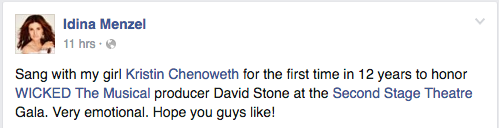
 Once again this dynamic duo reminds us how powerful & timeless this particular story of OZ is, and brings nostalgia to those of us who remember witnessing the original Glinda and Elphaba on stage. The song was part of the channels OutOfOz series, a delightful array of studio recordings from the musical.
 [post_title] => Watch Kristin Chenoweth And Idina Menzel Sing Together For The First Time In 12 Years
[post_excerpt] =>
[post_status] => publish
[comment_status] => open
[ping_status] => open
[post_password] =>
[post_name] => watch-kristin-chenoweth-and-idina-menzel-sing
[to_ping] =>
[pinged] =>
[post_modified] => 2017-07-06 11:33:05
[post_modified_gmt] => 2017-07-06 15:33:05
[post_content_filtered] =>
[post_parent] => 0
[guid] => http://theatrenerds.com/?p=1960
[menu_order] => 0
[post_type] => post
[post_mime_type] =>
[comment_count] => 0
[filter] => raw
)
[20] => WP_Post Object
(
[ID] => 1797
[post_author] => 7
[post_date] => 2016-05-06 01:00:20
[post_date_gmt] => 2016-05-06 01:00:20
[post_content] => For many thespians tech week is easily the most stressful time of the rehearsal process. From the last minute show tweaks to the long rehearsals, the grind of tech week can really cause you to feel emotionally and physically drained. But in the end when the curtain rises and the lights come up, all the hard work, blood, sweat, and tears suddenly seem worth it.
[post_title] => Watch Kristin Chenoweth And Idina Menzel Sing Together For The First Time In 12 Years
[post_excerpt] =>
[post_status] => publish
[comment_status] => open
[ping_status] => open
[post_password] =>
[post_name] => watch-kristin-chenoweth-and-idina-menzel-sing
[to_ping] =>
[pinged] =>
[post_modified] => 2017-07-06 11:33:05
[post_modified_gmt] => 2017-07-06 15:33:05
[post_content_filtered] =>
[post_parent] => 0
[guid] => http://theatrenerds.com/?p=1960
[menu_order] => 0
[post_type] => post
[post_mime_type] =>
[comment_count] => 0
[filter] => raw
)
[20] => WP_Post Object
(
[ID] => 1797
[post_author] => 7
[post_date] => 2016-05-06 01:00:20
[post_date_gmt] => 2016-05-06 01:00:20
[post_content] => For many thespians tech week is easily the most stressful time of the rehearsal process. From the last minute show tweaks to the long rehearsals, the grind of tech week can really cause you to feel emotionally and physically drained. But in the end when the curtain rises and the lights come up, all the hard work, blood, sweat, and tears suddenly seem worth it.
If this process sounds all too familiar, you're not alone thespian! We gathered 22 gifs that accurately explain the enigma we call



















 Last time in Everyday Dramaturgy we explored some basic questions about time and place that can help actors make great choices for their characters. Today we’ll look at two fun, creative activities that casts or individual actors can use to explore their characters’ emotions, motives, and behavior. These activities are meant to be hands-on, or rather “all senses on”.
 Next, you can structure the list as an “emotional plot” that matches up chronologically with all the scenes your character appears in. Find a song that connects to your central emotion in each scene, or if the scene is long and your character experiences a major shift, choose one song for each. The shifting moods of your character may be subtle, or may be extreme, but each character’s moods are based on their motives and how the plot frustrates them or clears a path for them.
This activity is useful even after you make the playlist. If you can connect to the emotion of a song or can feel it in your body, it becomes a quick touch-point to help enter the emotion of that scene before your entrance or during a transition. If your cast does this activity together formally, or even just for fun, you can share playlists with one another as a way to understand the characters you interact with in a deeper way. Most important, naming and identifying specific emotions is a skill that each actor needs. Finding a song that expresses “outrage” instead of just “anger” strengthens the way we develop our character. Finding the difference in tone between a generalized “happy” and “relieved” definitely makes a difference in our choices onstage. Music helps us to find the right hue, shade, and tone of each emotion our character needs.
Next, you can structure the list as an “emotional plot” that matches up chronologically with all the scenes your character appears in. Find a song that connects to your central emotion in each scene, or if the scene is long and your character experiences a major shift, choose one song for each. The shifting moods of your character may be subtle, or may be extreme, but each character’s moods are based on their motives and how the plot frustrates them or clears a path for them.
This activity is useful even after you make the playlist. If you can connect to the emotion of a song or can feel it in your body, it becomes a quick touch-point to help enter the emotion of that scene before your entrance or during a transition. If your cast does this activity together formally, or even just for fun, you can share playlists with one another as a way to understand the characters you interact with in a deeper way. Most important, naming and identifying specific emotions is a skill that each actor needs. Finding a song that expresses “outrage” instead of just “anger” strengthens the way we develop our character. Finding the difference in tone between a generalized “happy” and “relieved” definitely makes a difference in our choices onstage. Music helps us to find the right hue, shade, and tone of each emotion our character needs.
 If you aren’t able to do this as a cast or group, an individual actor can always have a little fun and pick an activity or outing to attempt while in character. Perhaps take a trip to the mall to shop for a specific item, or go out to eat, or attend a special event like a fair, walkathon, farmer’s market, or fundraiser. Let’s be honest: you might be very limited or have to forego this activity if your character is someone whose actions or behaviors would alarm others who weren’t in the know—see recent articles in the news of actors rehearsing intense scenes in parks and being confronted by concerned citizens and police! But if it’s acceptable in public and you’ve got a willing friend who’s game for living in the moment, you might be able to rope them into the fun by explaining the premise and purpose of improvising somewhere in real life.
Whatever mixer is chosen, it will set into motion social conventions like different generations reacting or participating differently, or gender roles that are assumed by the activity. But each cast member shows up in character and attempts to navigate the entire situation from beginning to end with the emotions, gestures, word choices and physical bearing that ring true for their character. It gives you a chance to explore-- and even make mistakes-- as you walk in your character’s shoes. It also reminds us as actors that for our character, each moment in the show is fresh, unpredictable, and “live,” so that we don’t become stuck in a rut of reactions or assumptions about our character.
When the mixer is over, have a short debrief session where cast mates can talk as themselves about what they discovered and how. Explain what you learned about your own character and others, and take the time to assess how the activity went. You’ll be surprised that even the awkward and indecisive moments helped you to access your character in a new and exciting way. And you’ll probably have a few laughs as well as revelations from “playing” in character.
If you aren’t able to do this as a cast or group, an individual actor can always have a little fun and pick an activity or outing to attempt while in character. Perhaps take a trip to the mall to shop for a specific item, or go out to eat, or attend a special event like a fair, walkathon, farmer’s market, or fundraiser. Let’s be honest: you might be very limited or have to forego this activity if your character is someone whose actions or behaviors would alarm others who weren’t in the know—see recent articles in the news of actors rehearsing intense scenes in parks and being confronted by concerned citizens and police! But if it’s acceptable in public and you’ve got a willing friend who’s game for living in the moment, you might be able to rope them into the fun by explaining the premise and purpose of improvising somewhere in real life.
Whatever mixer is chosen, it will set into motion social conventions like different generations reacting or participating differently, or gender roles that are assumed by the activity. But each cast member shows up in character and attempts to navigate the entire situation from beginning to end with the emotions, gestures, word choices and physical bearing that ring true for their character. It gives you a chance to explore-- and even make mistakes-- as you walk in your character’s shoes. It also reminds us as actors that for our character, each moment in the show is fresh, unpredictable, and “live,” so that we don’t become stuck in a rut of reactions or assumptions about our character.
When the mixer is over, have a short debrief session where cast mates can talk as themselves about what they discovered and how. Explain what you learned about your own character and others, and take the time to assess how the activity went. You’ll be surprised that even the awkward and indecisive moments helped you to access your character in a new and exciting way. And you’ll probably have a few laughs as well as revelations from “playing” in character.
 [post_title] => Let's Get Dramaturgical Baby! How To Be Hands-On With Your Character
[post_excerpt] =>
[post_status] => publish
[comment_status] => open
[ping_status] => open
[post_password] =>
[post_name] => lets-get-dramaturgical-baby
[to_ping] =>
[pinged] =>
[post_modified] => 2016-05-02 07:30:01
[post_modified_gmt] => 2016-05-02 07:30:01
[post_content_filtered] =>
[post_parent] => 0
[guid] => http://theatrenerds.com/?p=1733
[menu_order] => 0
[post_type] => post
[post_mime_type] =>
[comment_count] => 0
[filter] => raw
)
[22] => WP_Post Object
(
[ID] => 1743
[post_author] => 1
[post_date] => 2016-04-30 15:49:26
[post_date_gmt] => 2016-04-30 15:49:26
[post_content] =>
[post_title] => How Well Do You Know These Hamilton Lyrics?
[post_excerpt] =>
[post_status] => publish
[comment_status] => open
[ping_status] => open
[post_password] =>
[post_name] => how-well-do-you-know-these-hamilton-lyrics
[to_ping] =>
[pinged] =>
[post_modified] => 2016-04-30 15:49:26
[post_modified_gmt] => 2016-04-30 15:49:26
[post_content_filtered] =>
[post_parent] => 0
[guid] => http://theatrenerds.com/?p=1743
[menu_order] => 0
[post_type] => post
[post_mime_type] =>
[comment_count] => 0
[filter] => raw
)
[23] => WP_Post Object
(
[ID] => 1667
[post_author] => 9
[post_date] => 2016-04-28 08:30:44
[post_date_gmt] => 2016-04-28 08:30:44
[post_content] =>
[post_title] => Let's Get Dramaturgical Baby! How To Be Hands-On With Your Character
[post_excerpt] =>
[post_status] => publish
[comment_status] => open
[ping_status] => open
[post_password] =>
[post_name] => lets-get-dramaturgical-baby
[to_ping] =>
[pinged] =>
[post_modified] => 2016-05-02 07:30:01
[post_modified_gmt] => 2016-05-02 07:30:01
[post_content_filtered] =>
[post_parent] => 0
[guid] => http://theatrenerds.com/?p=1733
[menu_order] => 0
[post_type] => post
[post_mime_type] =>
[comment_count] => 0
[filter] => raw
)
[22] => WP_Post Object
(
[ID] => 1743
[post_author] => 1
[post_date] => 2016-04-30 15:49:26
[post_date_gmt] => 2016-04-30 15:49:26
[post_content] =>
[post_title] => How Well Do You Know These Hamilton Lyrics?
[post_excerpt] =>
[post_status] => publish
[comment_status] => open
[ping_status] => open
[post_password] =>
[post_name] => how-well-do-you-know-these-hamilton-lyrics
[to_ping] =>
[pinged] =>
[post_modified] => 2016-04-30 15:49:26
[post_modified_gmt] => 2016-04-30 15:49:26
[post_content_filtered] =>
[post_parent] => 0
[guid] => http://theatrenerds.com/?p=1743
[menu_order] => 0
[post_type] => post
[post_mime_type] =>
[comment_count] => 0
[filter] => raw
)
[23] => WP_Post Object
(
[ID] => 1667
[post_author] => 9
[post_date] => 2016-04-28 08:30:44
[post_date_gmt] => 2016-04-28 08:30:44
[post_content] => 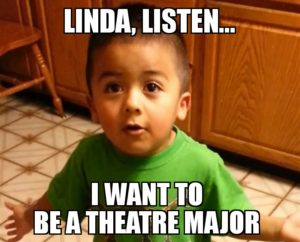 Are you a parent of a theatre kid? Well, they’re probably showing you this article because they want to be a theatre major and you’re the only thing standing in the way of them pursuing their dreams! Too harsh? No, it’s not! This is the rest of their life we’re talking about, so you can suck it up and invest five minutes to read an article that may result in a lifetime of happiness for your child.
Now… parents, I don’t want you thinking that I’m not acknowledging your concerns, because I know all your arguments and I’m here to say… you’re wrong. Here is
the list of parental concerns and then of course… my rebuttal:
Are you a parent of a theatre kid? Well, they’re probably showing you this article because they want to be a theatre major and you’re the only thing standing in the way of them pursuing their dreams! Too harsh? No, it’s not! This is the rest of their life we’re talking about, so you can suck it up and invest five minutes to read an article that may result in a lifetime of happiness for your child.
Now… parents, I don’t want you thinking that I’m not acknowledging your concerns, because I know all your arguments and I’m here to say… you’re wrong. Here is
the list of parental concerns and then of course… my rebuttal:
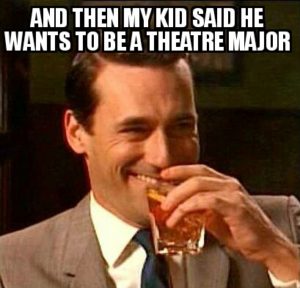
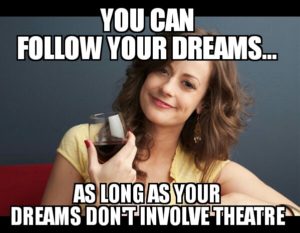 Isn’t a happy life what’s best? Tell me Mom and Dad, are you happy with your career? If you said yes, then it’s because you had people supporting you along the way telling you, “You can do it!” If you said no, then don’t you dream about a job that would make you happy? You could always apply to be a theatre major with your kid. Just because you gave up on your life and on your dreams… doesn’t mean Junior has to. Life is too short. Plus, I’ve never heard anyone say, “I’m really passionate about accounting.” You might remember the famous quote by Marc Anthony, “If you do what you love, you’ll never work a day in your life.”
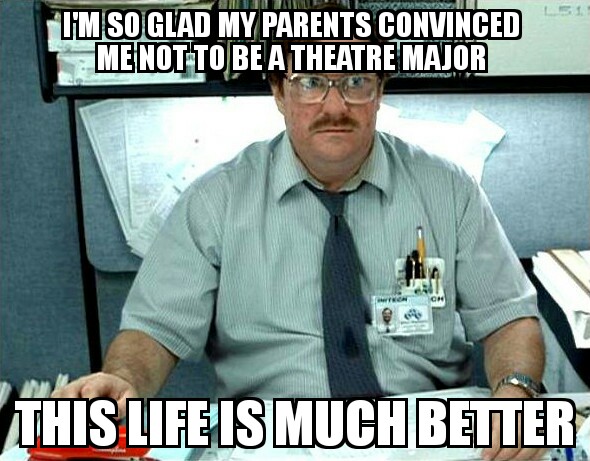 A theatre major is more versatile than any other major. Think about the skills you need for theatre, collaboration, problem solving, marketing, design, analysis, presenting and performing, time management, and the list goes on! Are you telling me these are skills that any employer wouldn’t love to see in an applicant? Plus, have you met your child? They’re hilarious and fun to be around. With those skills and that personality… what job can’t they get?
Parents, I just want to help you help yourselves. You love your kids, I know that and they know that (even if they do sometimes tell you otherwise). One way you can show your love is by supporting their decisions. If theatre isn’t for them… they’re going to find out in college. The life of a theatre major is tougher than most and it’s not for everyone. But if you tell your child they can’t do something… if you even hint at it, that’ll make them want to do it even more. If your child is going to succeed in theatre, wouldn’t you rather they do it because of you and not in spite of you?
A theatre major is more versatile than any other major. Think about the skills you need for theatre, collaboration, problem solving, marketing, design, analysis, presenting and performing, time management, and the list goes on! Are you telling me these are skills that any employer wouldn’t love to see in an applicant? Plus, have you met your child? They’re hilarious and fun to be around. With those skills and that personality… what job can’t they get?
Parents, I just want to help you help yourselves. You love your kids, I know that and they know that (even if they do sometimes tell you otherwise). One way you can show your love is by supporting their decisions. If theatre isn’t for them… they’re going to find out in college. The life of a theatre major is tougher than most and it’s not for everyone. But if you tell your child they can’t do something… if you even hint at it, that’ll make them want to do it even more. If your child is going to succeed in theatre, wouldn’t you rather they do it because of you and not in spite of you?
 Rehearsals are just beginning, you meet your tech crew for the first time and pray to God that everything will run smoothly.
 You quickly assess any trouble makers and let them know you don't want to be the "bad guy/gal", so they just need to listen up and be professional. Nothing wrong with firing a few "warning shots" to let them know you mean business.
 Listen to the director, remember your cues, and for goodness sake learn your lines or so help me God I will say the name of the Scottish play!
 Do we really need an explanation for this? Just. Don’t. Do. It.
 Even though they tend to get on your last nerve when they forget a cue or forget to mop the stage, the techies are your children. Nobody is going to mess with them, and if they do, they’ll have you to answer to!
 You're all mine!!! Muahahahahahahahahahahaha…
 You wonder how is this going to work & why did you even do this in the first place.
 Come at me! I dare you to bring slider thirteen up when I clearly said slider fifteen! Please, God, if I hear one more bad pun in the headset...
 Yeah go ahead and keep messing with that prop, I'll tell you where to put it...
 You’re tired, hungry, and you just want to go home...but everyone won’t stop horsing around! Come on y’all, we have been here for sixteen hours. Wrap. It. Up. Now. Please.
 You’ve done it! All your blood, sweat, tears and sanity have not gone to waste! You have reigned supreme and ran a wonderfully smooth show, heaven help you tomorrow though, you’ve got to do it all again. Correction, you get to do all of it again. Being a stage manager is one of the most stressful, time consuming jobs in the business, but hey, it’s a beautiful ride!


 In other words, you become super stressed and have to remind yourself that what you're going through is your passion for a reason. Then, your co-star gets super emotional because they kept forgetting what their cue was, or a dance step, or their significant other just broke up with them and you just try to comfort them like...


 As a producer, its alarming to me how many actors (even well-known) don’t have a website at all. Many who do have a site, haven’t updated it in a long time and the aesthetics echo the sentiment. A website is an actors home base, a portfolio of all the great work they have achieved. It should be a living resume that fans and potential employers can go to see how you shine. Think of it as your brands “audition” for people who have never personally watched you perform. A website can also display a level of importance and how serious you take your work.
Actors are busy trying to book auditions and get work, so a website may seem like a daunting task to take on. The important thing is to just get something up. Something is better than nothing. Odds are you know someone dabbling in web design, and if not, there are many platforms you can use to build a website without using code at all.
It can be overwhelming to know where to start, so I have highlighted some things below to help you get up and running. I also always recommend building your own site so you can update it without waiting for a developer. Also, developers are expensive and can hold your site somewhat hostage. It's worth it to struggle a bit and teach yourself how to build it.
As a producer, its alarming to me how many actors (even well-known) don’t have a website at all. Many who do have a site, haven’t updated it in a long time and the aesthetics echo the sentiment. A website is an actors home base, a portfolio of all the great work they have achieved. It should be a living resume that fans and potential employers can go to see how you shine. Think of it as your brands “audition” for people who have never personally watched you perform. A website can also display a level of importance and how serious you take your work.
Actors are busy trying to book auditions and get work, so a website may seem like a daunting task to take on. The important thing is to just get something up. Something is better than nothing. Odds are you know someone dabbling in web design, and if not, there are many platforms you can use to build a website without using code at all.
It can be overwhelming to know where to start, so I have highlighted some things below to help you get up and running. I also always recommend building your own site so you can update it without waiting for a developer. Also, developers are expensive and can hold your site somewhat hostage. It's worth it to struggle a bit and teach yourself how to build it.
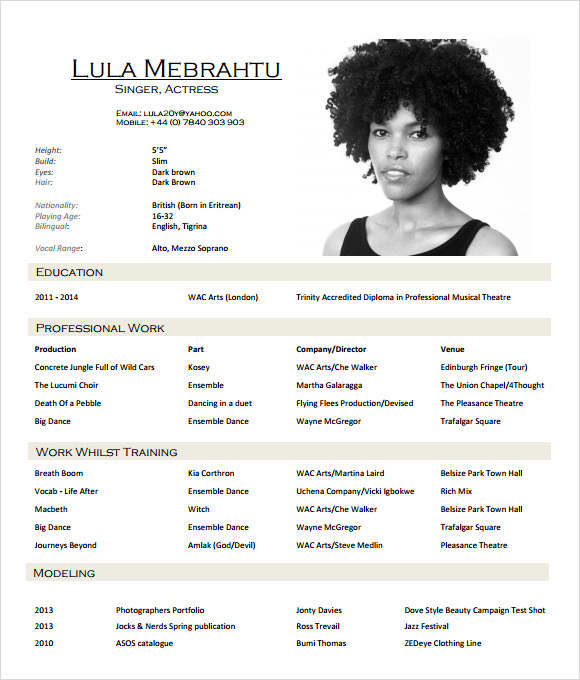 Auditioning and getting professional acting work is hard, so give casting directors every single reason possible to hire you. Present them with a clean, organized, and professionally put together resume of work. Don’t use crazy fonts or write short novels about each credit you list. Make it visually easy for directors to look at. Similar to a website, this is a birds eye view of how and why you may be qualified to get the part. Remember, it should only be 1 page that highlights your best work.
Resume format depends on certain factors, for a SAG example, GO HERE
Tip: Take the time to update your resume frequently. After you finish a job, add it on to avoid gaps between work.
Bonus: How To Write An Eye-Catching Acting Resume
Auditioning and getting professional acting work is hard, so give casting directors every single reason possible to hire you. Present them with a clean, organized, and professionally put together resume of work. Don’t use crazy fonts or write short novels about each credit you list. Make it visually easy for directors to look at. Similar to a website, this is a birds eye view of how and why you may be qualified to get the part. Remember, it should only be 1 page that highlights your best work.
Resume format depends on certain factors, for a SAG example, GO HERE
Tip: Take the time to update your resume frequently. After you finish a job, add it on to avoid gaps between work.
Bonus: How To Write An Eye-Catching Acting Resume
 Needless to say, looks and appearance are a big deal in the acting industry. A professional headshot is one of the best things you can have to give you an advantage at casting. Sorry folks, a great Instagram with a “sweet” filter does not cut it. A headshot should be viewed as an investment in your career; it’s a business expense. They are expensive and they are necessary, no way around it.
Casting directors will see dozens of people; don’t count on them to remember everything you did at auditions. When they review your resume and headshot for consideration, this is your chance to immediately tell them you are a professional and invest in your craft.
Bonus: 9 Hacks For Cheaper Headshots
Needless to say, looks and appearance are a big deal in the acting industry. A professional headshot is one of the best things you can have to give you an advantage at casting. Sorry folks, a great Instagram with a “sweet” filter does not cut it. A headshot should be viewed as an investment in your career; it’s a business expense. They are expensive and they are necessary, no way around it.
Casting directors will see dozens of people; don’t count on them to remember everything you did at auditions. When they review your resume and headshot for consideration, this is your chance to immediately tell them you are a professional and invest in your craft.
Bonus: 9 Hacks For Cheaper Headshots
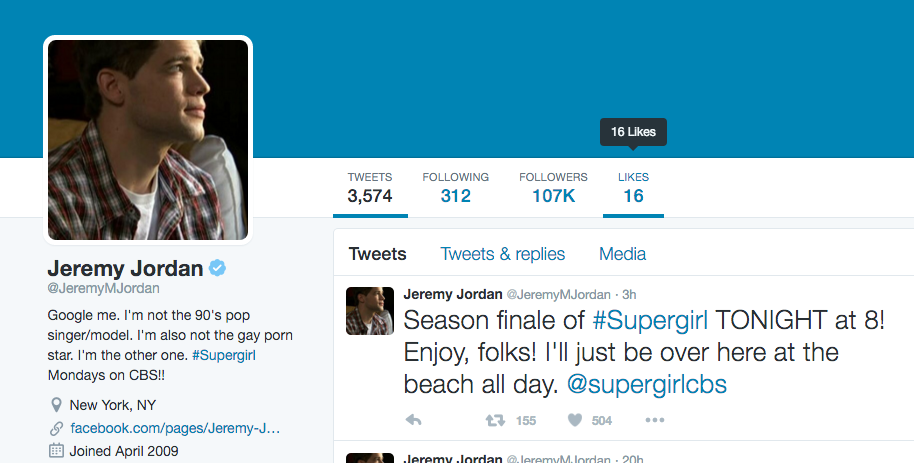 Social media is an amazing way to get your brand and work out to people immediately. The more fans and followers we have, the more appealing we will be when it comes to being cast in a show. Why? Because producers are taking a risk and putting money into a show, so the pressure is on to sell tickets. With acting, our jobs only last as long as the run of the show, so we need to take steps to build our own unique audience. If we do, we can alert our loyal followers of the next project and immediately fill the seats, thus increasing exposure for the show. Take a look at Jeremy Jordan’s twitter account; he has 107,000 followers. (AKA free advertising platform)
Besides selling tickets and getting work, fans love to see what you are up to. Acting is an exciting life full of intrigue for those in other fields. They are hungry to hear about your experiences as a professional.
Tip: Don’t feel pressure to be on every social media platform, try picking one to focus on and be consistent with. I’d recommend Twitter or Instagram. Post often, even when it seems there is not much to post about. People are interested in your routines and love to hear about the little details.
Bonus: 5 Broadway Stars Who Are Crushing Twitter
Social media is an amazing way to get your brand and work out to people immediately. The more fans and followers we have, the more appealing we will be when it comes to being cast in a show. Why? Because producers are taking a risk and putting money into a show, so the pressure is on to sell tickets. With acting, our jobs only last as long as the run of the show, so we need to take steps to build our own unique audience. If we do, we can alert our loyal followers of the next project and immediately fill the seats, thus increasing exposure for the show. Take a look at Jeremy Jordan’s twitter account; he has 107,000 followers. (AKA free advertising platform)
Besides selling tickets and getting work, fans love to see what you are up to. Acting is an exciting life full of intrigue for those in other fields. They are hungry to hear about your experiences as a professional.
Tip: Don’t feel pressure to be on every social media platform, try picking one to focus on and be consistent with. I’d recommend Twitter or Instagram. Post often, even when it seems there is not much to post about. People are interested in your routines and love to hear about the little details.
Bonus: 5 Broadway Stars Who Are Crushing Twitter
 I know what you’re thinking, why carry around these old dinosaurs in our pockets in 2017? The answer is you never know whom you will meet and where you will meet them. Connections and relationships are 9/10 of the theatre industry law, so be prepared at any given moment. If you meet a big time casting director or producer at a mixer or at the local Starbucks, giving them a business card can be your foot in the door, a way to leave a lasting mark with them on their busy day. It’s not a great feeling when someone asks you for a card and you don’t have one, I’ve been there before. You may not need them often, but you will thank the lucky stars when the time comes.
Tip: VistaPrint makes it easy to design your own business cards
I know what you’re thinking, why carry around these old dinosaurs in our pockets in 2017? The answer is you never know whom you will meet and where you will meet them. Connections and relationships are 9/10 of the theatre industry law, so be prepared at any given moment. If you meet a big time casting director or producer at a mixer or at the local Starbucks, giving them a business card can be your foot in the door, a way to leave a lasting mark with them on their busy day. It’s not a great feeling when someone asks you for a card and you don’t have one, I’ve been there before. You may not need them often, but you will thank the lucky stars when the time comes.
Tip: VistaPrint makes it easy to design your own business cards
 Tell us you need a show designed with a fully furnished kitchen and living room, a starry night prom set, a high school classroom and a city street with a $300 budget? Don’t worry, we’ve got this.
 For thespians, handling rejection (well) is a great skill to learn. So what, we didn’t get the part...we think on how to better ourselves, keep calm, & be more prepared for the next audition. Remember that we’re all in this together, and rejection is part of the business. If we need to go cry into our cup of coffee, we do, but only for a moment because there is always (hopefully) another audition/opportunity around the corner!
 Thief’s Knot? Got it. Clothesline Hitch? You betcha! Bowline? Now, do you want that right handed, left handed, upside down or right side up?
 Costuming is probably one of the best parts of theatre (in my opinion), when an opportunity such as Halloween or Comic Con comes around… you’d better believe we are right there with our best efforts at hand!
 Thespians are some of the most understanding and caring people on the planet. Being an artist is a vulnerable rollercoaster ride of ups and downs. Whether an actor, who has to step into the minds of people in all situations, or a techie, who has to deal with the actors and their multiple personalities; you learn to understand everyone and every situation. At times, everyone in the industry needs a shoulder to cry on, or is ready and willing to offer their shoulder to someone else.
 Who else needs to be highly caffeinated to do eight shows a week...once every day of the week and twice on Sunday? We do! Who needs to be at work call at 4:00am before the actors get in? We do! Who needs four shots of espresso five times a day? We do! (Not really, I think you might die if you had that much caffeine, but you get the point).
 Thespians have a great ability to work well and even thrive in high-pressure situations. Actors have to go out on stage every night and perform their part, knowing many things could go wrong. Directors feel the heat for getting the show ready, musician's need to know the music flawlessly, stage managers need to memorize the cues, and the list goes on. We even like the pressure, its exciting, and gives us fuel when the time for execution has arrived.
 The lead actress’ dress just ripped and her cue to go back on is on 45 seconds, stitch that rip! A Fellow actor flops on a line or is not there for his/her cue on time? Improv is life! Term paper due in the next hour? Turn on Wicked and defy the gravity of that situation because you are a Thespian who can handle anything with grace and poise. Now, go out there and be the beautifully talented, crazy resourceful person you are!
 Dramaturgy can be summarized as “the craft or the techniques of dramatic composition.” Most directors and technical directors “do” dramaturgy either deliberately or as an innate part of their process. Good dramaturgy helps a production to “ring true” with the audience because it unifies “the world” of the play--things like a show’s specific era, setting, and the production’s intention. Professional dramaturgs with MFA or PhD degrees are often hired by professional productions as consultants to help clarify and inform some of the choices available in the staging of each show.
 Actors can explore the in-depth setting of their show, whether it’s Shakespearian or 1980s Hair Bands, the 1930s Dustbowl or the 1700s Early Baroque period in France period. Dramaturgy asks actors to think about the literal setting, but also to the social and cultural settings their characters operate in.
Here are 3 Big Questions you can ask yourself to “dig into” your character. And each big question has a list of smaller questions that you can refer to each time you have a new show and new character to develop.
Actors can explore the in-depth setting of their show, whether it’s Shakespearian or 1980s Hair Bands, the 1930s Dustbowl or the 1700s Early Baroque period in France period. Dramaturgy asks actors to think about the literal setting, but also to the social and cultural settings their characters operate in.
Here are 3 Big Questions you can ask yourself to “dig into” your character. And each big question has a list of smaller questions that you can refer to each time you have a new show and new character to develop.
 Yes, the physical location, but also, what are the sub-sets or other locations referenced in the text? What is the exact date in time, and what other significant events were happening here or in the world? What season is it, what time of day it is, and do these affect my character or the plot in any way? What designs, colors, objects, inventions, philosophies, trends, and fads were happening in this place and time?
You could discuss these items with your director or acting coach, or with other actors; maybe your director has already done this with you. It’s easy to research this online if needed, and even to see historical images of the place and time.
These questions about time and place will help you to imagine where your character is coming and going from, and will really help you get into the “mindset” of your character. Knowing your era in detail helps you to make choices consistent with the time and place. Perhaps your character has never travelled anywhere beyond their little bubble. Perhaps they are a “person of the world,” or maybe they take a staunch local’s perspective. Maybe a season or holiday or the ticking of time is influencing their decisions or motives. Maybe a certain historical objector invention is a good metaphor for your character, or maybe a certain philosophy from the era explains your character’s motives.
Yes, the physical location, but also, what are the sub-sets or other locations referenced in the text? What is the exact date in time, and what other significant events were happening here or in the world? What season is it, what time of day it is, and do these affect my character or the plot in any way? What designs, colors, objects, inventions, philosophies, trends, and fads were happening in this place and time?
You could discuss these items with your director or acting coach, or with other actors; maybe your director has already done this with you. It’s easy to research this online if needed, and even to see historical images of the place and time.
These questions about time and place will help you to imagine where your character is coming and going from, and will really help you get into the “mindset” of your character. Knowing your era in detail helps you to make choices consistent with the time and place. Perhaps your character has never travelled anywhere beyond their little bubble. Perhaps they are a “person of the world,” or maybe they take a staunch local’s perspective. Maybe a season or holiday or the ticking of time is influencing their decisions or motives. Maybe a certain historical objector invention is a good metaphor for your character, or maybe a certain philosophy from the era explains your character’s motives.
 Which relationships in people’s lives at this time have the most power over them? Which positions in society have the most influence and status in this time and place? In the play, who has the most “power,” and why? Where does “power” come from in the world of this text: is it money, education, religion, experience, physical strength? Is there a difference of power between old and young, or different generations? What is the difference of power among genders or races, if any? Which names or titles do characters use for one another, why, and when are titles optional?
These questions about power will help you figure out if and why your character has any innate power or status over others in this text. This will explain many of their actions and reactions to the plot and to others. Perhaps your character is struggling for some kind of agency or personal power they are lacking. Perhaps they have control of that, or maybe they don’t, and that’s frustrating to them. Perhaps a discrepancy of power or status is behind that conflict driving your character or others.
Which relationships in people’s lives at this time have the most power over them? Which positions in society have the most influence and status in this time and place? In the play, who has the most “power,” and why? Where does “power” come from in the world of this text: is it money, education, religion, experience, physical strength? Is there a difference of power between old and young, or different generations? What is the difference of power among genders or races, if any? Which names or titles do characters use for one another, why, and when are titles optional?
These questions about power will help you figure out if and why your character has any innate power or status over others in this text. This will explain many of their actions and reactions to the plot and to others. Perhaps your character is struggling for some kind of agency or personal power they are lacking. Perhaps they have control of that, or maybe they don’t, and that’s frustrating to them. Perhaps a discrepancy of power or status is behind that conflict driving your character or others.


Over my decade in the trenches, this is by far, the BEST advice I’ve received to date on how to be an actor.
It’s hard to be an interesting/likeable/castable actor when you are completely boring. Trust me, no agent or casting director wants to hear about how many classes you’re taking, or that you found a perfect monologue, or how you really just ‘got it’ during that Viewpoints workshop the other day. They want to know what makes you special and not just like every other actor that walked through their door that day. Go to new places, learn how to cook, get a hobby, fall in love, make babies and live your life. Then wow them with how you speak three different languages, dated a descendant of Ernest Hemingway, and deliver babies in Guatemala during your free time. Not only will you stand out- but you’ll live a much more fulfilling life.Get a life.
I’ve never had an official dresser before, so at first, I had no idea what this meant. Basically, be nice to people. In fact, be nice to EVERYONE. Buy the costume department coffee. Say thank you to the guy who goes up your shirt to mic you each day. Make friends with the gaffers, the set designers, the sound guys, etc. Not only do you never know what assistant may be your future agent/director/producer one day- but it just feels good to do good and put all that positive energy out there.Tip Your Dresser.
It’s easy to get in your head trying to figure out what you think that “they” want, and then end up going crazy making choices that aren’t true to yourself. Sometimes, you just have to say, screw it and do the monologue you really want, sing the song you love, and read the copy the way your instincts tell you- even though it goes against the direction they gave. When we listen to our gut and do what we love, it radiates out and gets attention- sometimes it even books the job, but ultimately we leave feeling satisfied.Don’t audition for them anymore, do it for yourself.
Watch the news, read books, see plays, go to museums. Step out of your comfort zone. If you only listen to pop music, try listening to country for a week. Download a new podcast, read a book that you normally would have never thought to read. When we step out of our daily routines and explore new areas of music, literature, and culture, we explore new sides of our personalities; thus, creating new and exciting characters, which makes for a more dynamic life, which makes for more dynamic art.Know what’s going on in the world.
Don’t fall into the trap of comparing yourself to your friends and peers. The rain falls on all of us, the sun shines on all of us. Be genuinely ecstatic when your colleague books that gig. Share their successes with the world, be a cheerleader. Not only does it feel a million times better to celebrate someone rather than pouting, but, those good vibes will come back your way.Never compare, never despair.
It’s a cold reality but one we must embrace. Just picture your favorite movie stars, Broadway divas, and television actors- they all still get rejected! Doesn’t that make you feel better? Huh? Huh? Maybe not. But just remember we all deal with it, it’s part of the package. So figure out what works for you- a trip to the beach, journaling, kickboxing, or Haagen-Dazs. Whatever it is, find what works so you can put your rejection behind you in order to move forward.Rejection never goes away.
Whether it’s a basement cabaret, a sketch video, a one-person show or a podcast. Do it! It doesn’t matter if that agent you’ve been dying to get in front of turns up for opening night or not. What matters is you’re creating and keeping your passion alive. Regardless if you realize it or not, you’re putting something out there and something eventually will come back from it.Create your own work
What's the best acting advice you have ever received? Have some advice of your own? Leave a reply below...
[post_title] => The Best Acting Advice I Ever Received [post_excerpt] => [post_status] => publish [comment_status] => open [ping_status] => open [post_password] => [post_name] => the-best-acting-advice-i-ever-received [to_ping] => [pinged] => [post_modified] => 2016-06-10 16:45:20 [post_modified_gmt] => 2016-06-10 20:45:20 [post_content_filtered] => [post_parent] => 0 [guid] => http://theatrenerds.com/?p=2509 [menu_order] => 0 [post_type] => post [post_mime_type] => [comment_count] => 1 [filter] => raw ) [1] => WP_Post Object ( [ID] => 2765 [post_author] => 1 [post_date] => 2016-06-08 09:18:11 [post_date_gmt] => 2016-06-08 13:18:11 [post_content] => https://www.youtube.com/watch?v=YshgmStEZh0 What happens when you get big Broadway stars like Lin-Manuel Miranda, Audra McDonald, Jesse Tyler Ferguson and Jane Krakowski in a car together with James Corden? The result is the most amazingly epic session of "Carpool Karaoke" you have ever seen (and heard). The stars got together for the popular segment as the Tony's Awards draw near. James Corden will be hosting the ceremony on Sunday June 12th. [post_title] => Watch Broadway Stars Sing Carpool Karaoke With James Corden [post_excerpt] => [post_status] => publish [comment_status] => open [ping_status] => open [post_password] => [post_name] => watch-broadway-stars-sing-carpool-karaoke-james-corden [to_ping] => [pinged] => [post_modified] => 2017-07-06 11:32:28 [post_modified_gmt] => 2017-07-06 15:32:28 [post_content_filtered] => [post_parent] => 0 [guid] => http://theatrenerds.com/?p=2765 [menu_order] => 0 [post_type] => post [post_mime_type] => [comment_count] => 0 [filter] => raw ) [2] => WP_Post Object ( [ID] => 2685 [post_author] => 8 [post_date] => 2016-06-07 13:32:30 [post_date_gmt] => 2016-06-07 17:32:30 [post_content] => Have you ever noticed that many small or regional community theatres have “little” in their name? For example, Baton Rouge Little Theatre, Springfield Little Theatre of Missouri, and The Little Theatre of Alexandria? These names come out of an era in theatre history at least 100 years old, and out of a debate that’s still alive today: which is “more important”: community theatre or professional commercial theatre? What are the crucial differences between regional theatre and something like Broadway? Before we even called it “community theater” in America, there was the Little Theatre Movement.
A Brief Background
There was a form of regional theatre in American by the late 1800s, when The European Theatre Movement began to affect American Theater, and small theatres and performing groups were springing up across the country. These early groups were often focused on “art theatre” and performing classic European works like Ibsen. One early example is Lousia May Alcott, the famous author of Little Women, who founded a performing group in 1874 called the Concord Players. Another example is the Footlight Club, in Jamaica Plain, Massachusettes, which the American Association of Community Theatres recognizes as “the oldest continuously producing community theatre in the U.S.”Over 100 community theatres were founded in America just during the 20 years after World War I alone. This movement caused a revolution in playwriting, where community stories were prioritized and told onstageBy the 1910s to the 1920s, regional American theater had coalesced into a vibrant movement referred to as “The Little Theatre Movement,” named of course for the size of these theatres’ performance spaces. This movement largely represented American civic pride, community involvement, and a revolution in how theatre was produced and for whom it was produced. Over 100 community theatres were founded in America just during the 20 years after World War I alone. This movement caused a revolution in playwriting, where community stories were prioritized and told onstage; it led to the development of more American playwrights; it created accessibility to theatre in small communities all over the United States. This meant that diverse kinds of people were involved in theatre, working together, studying scripts, writing, performing, and engaging in art with their communities. And in the beginning, The Little Theatre Movement was really a backlash against commercial theatre then, which the people saw as limited in who it could reach, and limiting in who it represented. One catalyst for this new style of community-driven drama, according to Robert Gard and Gertrude Burley, was after a famous tour of the Irish Players who came to America in 1911, which “fired the American imagination” and “aroused the antagonism of American citizens against the feeble productions of the commercial theatre, and seemed to be the catalyst that caused countless dramatic groups to germinate all over America , as a protest against commercial drama.” (Community Theatre: Idea and Achievement, 1959). According to the AACT, after World War I, there was a definite shift in that these small playhouses were formed by individuals, not groups or clubs.
Important Figures in Little Theatre
[caption id="attachment_2690" align="alignleft" width="220"] Jane Addams 1926[/caption]
Jane Addams (1860-1935), famous to most Americans as a leader in social reform, created the Hull House as a social settlement to provide wrap-around social services for the poor or Chicago in the late 1800s. According to the Hull House Museum, not only did the settlement provide “kindergarten and day care facilities for the children of working mothers; an employment bureau; an art gallery; libraries; English and citizenship classes,” but it was a “cultural center with music, art, and theater offerings.” Jane Addams was a precursor who embraced the concepts underlying the Little Theatre Movement, and developed a theatre as a critical part of her community. Wilfred R.Cleary, a frequent actor in the Hull House Players as far back as 1933, says the theatre began “enriching the lives of neighborhood audiences under the inspired leadership of Jane Addams” as early as 1889. Stuart J. Hecht, in his scholarly article, says that Chicago’s Hull House Theatre “was developed specifically to combat the corrupting influences of urban tenement life.” In other words, the arts component to the settlement was “a safe haven and a place where the immigrants living on Chicago's Near West Side could find companionship and support and the assistance they needed for coping with the modern city” (Hull House Museum).
[caption id="attachment_2694" align="alignright" width="350"] The Hull House Players[/caption]
During its height, the Hull House Players were well-known nationally and even internationally, and they toured in major cities in the U.S. Cleary says their work was “ambitious and adventuresome, with work by celebrated dramatists as well as new, yet-to- be-proven plays.” What we still see is that the major functions of community and regional theatre today are precisely to enrich the full community, to provide a stage for audiences to see new works, ground-breaking works, or smaller venue works that everyday audiences wouldn’t have the chance to see otherwise. They usually do this at prices more affordable to all, and they commonly go out of their way to offer free showings or enrichment activities for students, senior citizens, and those needing special services. Susan Glaspell (1876-1948) was a famous and prolific playwright, actress, and novelist known as a pioneer feminist writer. She wrote the acclaimed play Trifles. Glaspell, her husband George Cram Cook, and their theatre friends were part of an avante-garde writers and artists group and eventually, she and her husband founded the Province Town Players in 1915, recognized as the first official Little Theatre. According to scholar Martha Carpentier, this was "the most important, innovative moment in American theatre," in part for “launching the career of Eugene O'Neill and building an audience for American playwrights.” George Cook described the aim of the group: “to give American playwrights a chance to work out their ideas in freedom. "The Players intended to create a group where playwrights could write and produce their own productions “without submitting to the commercial managers' interpretation of public taste.” After two years, they moved the Players to New York City and began performing there, where they were part of a Bohemian spirit that ultimately became the heart of Greenwich Village. They were associated with groundbreaking American writers like Upton Sinclair, Edna St. Vincent Millay, Wallace Stevens; and Robert Edmund Jones came out of Glaspell’s theatre. Eleanor J. Gainor says that the Little Theatre Movement was a direct response to the “tepid” commercial theatre of the day, and provided an outlet for stories of social significance. In many regional theatres today, this is still a primary focus in works they choose to produce.
[caption id="attachment_2698" align="alignleft" width="248"] Viola spolin 1946[/caption]
Viola Spolin (1906-1994) trained in social work and then taught theatre classes at Hull House in the 1920s under Jane Addams. The Little Theatre Movement and its connection to communities and everyday people paired well with Spolin’s work with children and immigrants, who participated in theatrical activities as both a method of rehabilitation and as creative expression. Spolin became the originator of Theatre Games, and founded the first improv acting company in America, The Compass Players. Chicago has a well-known theatre scene, particularly in improvisation and comedy, like the Second City group, which Spolin also founded, and which has launched many American comedy careers—think of modern examples Jerry Stiller, Fred Willard, John Belushi, Dan Akroyd, Amy Poelher, Tina Fey and Stephen Colbert. All of this came out of the Little Theatre Movement, and it symbolizes its power for a wide cross section of people in every community to participate in the arts and be affected by the theatre.
The Debate Continues
Community theatre and the Little Theatre movement have waned and waxed with the seasons, with a decline post-World War II, and a resurgence in the socially-aware 1960s. Over the years, many of these little theatres became quality training schools for actors and directors, and conversely, over decades, many of them ended up evolving into professional groups contrary to their original charters. Some in the theatre world think community and regional theatres are producing more “big sellers” these days, like musicals or a reproduction of the latest Broadway hit in order to make money, stoke popularity, and improve the bottom line. The questions some theatre people are asking today is what happened to the extraordinary drive and mission of the Little Theatre Movement in America? Has it been stunted, and have we forsaken our forebears’ intentions? If we’re indeed in a downturn of American “little theatre” innovation, is it out of choice or necessity? It’s clear that there is a place both for commercial and community theatre, but the important question is, will our community and regional theatres endeavor to keep revitalizing our vibrant Little Theatre heritage? [post_title] => Where Did Community Theatre Come From? [post_excerpt] => [post_status] => publish [comment_status] => open [ping_status] => open [post_password] => [post_name] => where-did-community-theatre-come-from [to_ping] => [pinged] => [post_modified] => 2016-06-09 13:12:17 [post_modified_gmt] => 2016-06-09 17:12:17 [post_content_filtered] => [post_parent] => 0 [guid] => http://theatrenerds.com/?p=2685 [menu_order] => 0 [post_type] => post [post_mime_type] => [comment_count] => 0 [filter] => raw ) [3] => WP_Post Object ( [ID] => 2724 [post_author] => 1 [post_date] => 2016-06-06 07:22:33 [post_date_gmt] => 2016-06-06 11:22:33 [post_content] => We asked you Theatre Nerds what what movies you think should be made into Broadway musicals. After receiving over 400 responses, there were some clear winners. Providing a full disclaimer, some of these shows have been made (or attempted) into musicals, but have either flopped or not made it to the Broadway stage. Two of the top voted movies also have upcoming productions so we left them off the list. These two were: Mean Girls & Back To The Future. Some of our favorites that didn't quite make the list: Godfather (a parody version) & Jurassic Park!Here are your top 15 movies that should be made into Broadway musicals:
15. Spaceballs - 19 Nerd Votes
14. The Sandlot - 25 Nerd votes
13. Clue - 28 Nerd Votes
12. Hercules - 30 Nerd Votes
11. Pirates of the Caribbean - 34 Nerd Votes
10. The Goonies - 35 Nerd Votes
9. Ferris Bueller's Day Off - 36 Nerd Votes
8. The Perks of Being a Wallflower - 39 Nerd Votes
7. Labyrinth - 43 Nerd Votes
6. Napoleon Dynamite - 49 Nerd Votes
5. The Princess Diaries - 58 Nerd Votes
4. The Great Gatsby - 62 Nerd Votes
3. Monsters, Inc. - 76 Nerd Votes
2. The Breakfast Club - 83 Nerd Votes
1. The Princess Bride - 91 Nerd Votes
What movie would you like to see as a musical? Leave a reply below...
[post_title] => 15 Movies That Should Be Made Into Broadway Musicals [post_excerpt] => [post_status] => publish [comment_status] => open [ping_status] => open [post_password] => [post_name] => movies-that-should-be-musicals [to_ping] => [pinged] => [post_modified] => 2016-06-06 07:34:47 [post_modified_gmt] => 2016-06-06 11:34:47 [post_content_filtered] => [post_parent] => 0 [guid] => http://theatrenerds.com/?p=2724 [menu_order] => 0 [post_type] => post [post_mime_type] => [comment_count] => 15 [filter] => raw ) [4] => WP_Post Object ( [ID] => 2513 [post_author] => 190 [post_date] => 2016-06-04 11:00:35 [post_date_gmt] => 2016-06-04 15:00:35 [post_content] =>1. You will cry in front of every teacher you have.
Maybe because of a scene...but most likely just because of life.
2. You might get naked in class.
Never a requirement (obvi!!). But sometimes, it just happens. ¯\_(ツ)_/¯
3. You won’t be going out on Thursday nights.
Aka you might be the only one of your friends to have class on Friday...and then rehearsal on Saturday...and a show on Sunday.
4. You’ll question what you’re doing...a lot.
In your acting class...in your acting major...in your acting life...
5. You’ll embarrass yourself THOROUGHLY.
But it’ll get to the point where you don’t even care anymore! Which, honestly, is pretty freakin’ awesome.
6. You and your classmates will bond SO FAST.
Once #5 (or #2) happens, how could you not?
7. You’re gonna get really good at interpretive dance.
No, like really good. Something like 40% of your BFA is interpretive dancing.
8. You’ll start getting really meta when bad things happen to you, especially when you start learning about emotional recall.
*Roommate eats last of your cinnamon toast crunch* “Well. I’ll be remembering THIS for Medea later.”
9. Acting parties are by far the BEST parties.
Nothing like a little emotional exploration to really get a party going.
10. You’ll never watch a movie or play the same way again.
Especially ones with dialects. “Ooooh did you hear that intrusive r? SWEET.”
11. You’ll graduate feeling like you’re prepared for nothing, and yet prepared for EVERYTHING.
Acting skills = life skills, y’all. Bring it.
Have one of your own? Leave a reply below...
[post_title] => 11 Things Nobody Tells You About Acting School [post_excerpt] => [post_status] => publish [comment_status] => open [ping_status] => open [post_password] => [post_name] => things-nobody-tells-you-about-acting-school [to_ping] => [pinged] => [post_modified] => 2016-10-11 16:44:41 [post_modified_gmt] => 2016-10-11 20:44:41 [post_content_filtered] => [post_parent] => 0 [guid] => http://theatrenerds.com/?p=2513 [menu_order] => 0 [post_type] => post [post_mime_type] => [comment_count] => 1 [filter] => raw ) [5] => WP_Post Object ( [ID] => 2632 [post_author] => 7 [post_date] => 2016-06-02 09:50:00 [post_date_gmt] => 2016-06-02 13:50:00 [post_content] =>Be fearless. Do what YOU do and be yourself, because that’s what’s going to set you apart from the thousands of others who are trying to do the same thing as you. -Brandon KalmThere’s been a chilling feeling creeping through the streets of Broadway over the past couple of weeks thanks to Duncan Sheik’s new musical American Psycho. The murderous tale of investment banker Patrick Bateman, played by Benjamin Walker, has been thrilling audiences since its opening on April 21 at the Schoenfeld Theatre. In addition to American Psycho’s captivating book and electrifying score, the musical’s cast is a group of highly talented and extremely fit performers who bare it all out on the stage (literally). Among them is Broadway newcomer Brandon Kalm, a 2014 graduate of Pace University in New York. Kalm was bit by the acting bug during his freshman year of high school after being asked to audition for that year’s production of Fiddler on the Roof. He soon found himself immersed in the craft which eventually led him from Texas to New York City. Kalm told us a little about how attending college in New York greatly benefited his career. Kalm- “Pace was really incredible. It did so much for me [as a performer]. I had never really taken a voice lesson or an acting course, but living in New York City and making the connections I did through the school, working alongside people who are professionals in the industry, was so valuable to me. And my classmates who I went to school with were young professionals [themselves]; kids who were eighteen years old and working on Broadway. So I learned a lot by being surrounded by all these incredibly talented people.” [caption id="attachment_2640" align="alignleft" width="343"]
Brandom in "American Idiot"[/caption]
After his second year of college, Kalm booked the touring company of American Idiot, taking a leave of absence from his education to travel the world with the show. He returned, however, after eighteen months and graduated in May 2014. Being a strong believer in the benefits of education, Kalm continued his studies at the prestigious William Esper Studio with Bill Esper.
In January of 2015, Kalm auditioned for workshop production of American Psycho. After performing in front of the musical’s creative team, he received the news that he did not book the show. His career continued, however, until he auditioned for the show again in October of 2015. After not hearing back for months after the audition, he assumed he hadn’t booked the gig. To his surprise, the call came four months later in January informing Kalm that he would be making his Broadway debut as a standby in American Psycho.
A standby is a performer who is ready at a moment’s notice to step into the show. Though they don’t perform every night, Kalm told us how a standby’s job is truly never finished.
Kalm- “Since I do cover five different roles, the work is truly never done. I’m constantly running the show backstage and what people often forget about is that there is a whole other show happening backstage. [For instance], the dressers have their own set way of how to do quick changes with one person changing here and another there while another is running across the stage to get their costume. So you’re learning the backstage choreography as you’re solidifying the onstage choreography which is a lot of work.”
Gianluca- American Psycho is such an unconventional show, something never before seen on Broadway. What’s it like to be a part of this electrifying production?
Kalm- “For me, I always want to be working on projects like this which is why I’m so lucky to be a part of this show. When you’re pushing the envelope, there are going to be people who hate it because that’s the nature of art. But, at the same time, there are going to be people who are obsessed with it, who can’t get enough of it, who are completely fascinated by it and want to know more about it, and those are the people we are doing it for.“
Gianluca- What advice do you have for aspiring performers?
[caption id="attachment_2645" align="alignright" width="350"] Brandon with fellow American Psycho Cast Members[/caption]
Kalm- “Be fearless. Don’t be afraid to look like an idiot or sound bad or to be terrible at a scene. You do your best learning and growing when you are failing. As long as you are positive about it and pushing forward and following your dreams then everything is going to work out. And be unique. Do what YOU do and be yourself, because that’s what’s going to set you apart from the thousands of others who are trying to do the same thing as you."
Follow Brandon on Instagram @BKalm and on Twitter @BrandonKalm and make sure to catch American Psycho before it closes on June 5.
[post_title] => Broadway's Brandon Kalm On American Psycho, The Job Of A Standby, & Advice For Young Actors
[post_excerpt] =>
[post_status] => publish
[comment_status] => open
[ping_status] => open
[post_password] =>
[post_name] => broadways-brandon-kalm-on-american-psycho-job-of-a-stand-by
[to_ping] =>
[pinged] =>
[post_modified] => 2016-06-02 10:05:32
[post_modified_gmt] => 2016-06-02 14:05:32
[post_content_filtered] =>
[post_parent] => 0
[guid] => http://theatrenerds.com/?p=2632
[menu_order] => 0
[post_type] => post
[post_mime_type] =>
[comment_count] => 0
[filter] => raw
)
[6] => WP_Post Object
(
[ID] => 2358
[post_author] => 9
[post_date] => 2016-05-31 12:11:05
[post_date_gmt] => 2016-05-31 16:11:05
[post_content] => Every theatre department is unique in its own way, but there seem to be the same type of people in each group. Here is a list of the 18 personalities that comprise pretty much every theatre department.
1. The Annoying Talent
 photo credit
The Annoying Talent is very talented… there’s no doubt, but you kind of hate them for it. Everything comes naturally to them and it seems like they don’t have to work as hard as everybody else. They can do no wrong.
2. The Tech Guru
 photo credit
The Tech Guru can do anything… seriously. We’re not certain when they had time to learn all the stuff they know. If you turn your back for one second, they have the set built. Let’s be honest, the theater belongs to them.
3. The Hidden Talent
4. The Athlete
 photo credit
The Athlete thought it would always be fun to try acting. They’re not bad either! By the end of the show they’ll say, “I wish I would have done theatre sooner.” It’s always fun having half the football team in the audience because you cast the wide receiver.
5. The Drama (AKA The Gossip)
 photo credit
The Drama is the reason we call it the “Drama Department.” When they’re not spreading rumors on Twitter and Facebook… you might hear common phrases like “She said,” “He said,” and “Let them say it to my face.”
6. The Optimist
photo credit
The Optimist always has a smile… it’s slightly alarming, but refreshing at the same time. You’re not sure how they’re able to generate a smile as often as they do, but you love it!7. The Singer
photo credit
The Singer knows they can sing… and they let everyone else know it. Yes, we know you know every song in Hamilton. And no, we don’t want to hear it for the eighth time today.8. The Hugger
photo credit
The Hugger loves EVERYONE! They will give you hug. You can’t say no… you can’t escape the hug.9. The Overachiever
 photo credit
The Overachiever does everything in theatre. If ever you can’t find them… check the theatre. You often hear them joking that they should just sleep at the school… because they’re always there. The department wouldn’t function without them!
10. The Boss
photo credit
The Boss gets work done! These people are usually attracted to student leadership jobs like stage manager, student director, and crew chief. Their favorite thing in life is bossing people around… and they’re good at it.11. The Mom
photo credit
The Mom is everyone’s best friend. They always take care of everyone and wipe our tears when we cry.12. The Absent
 photo credit
The Absent is the person who you know is in the show, but you don’t usually see them until show night. They give a whole new meaning to “Empty chairs at empty tables.” They always seem to have other commitments… allegedly.
13. The Fan
photo credit
The Fan is everyone’s biggest fan! They attend every show and always tell you how great of a job you did. They aspire to be just like you!14. The Critic
 photo credit
The Critic cannot be pleased. No one is ever good enough for their taste. They always have an opinion (welcomed or unwelcomed).
15. The Awkward
 photo credit
The Awkward is exactly what you think. Every theatre department has that one awkward kid who is too awkward to be in a show… until you finally see them in a perfect role and then you must see them in every show! There is something mesmerizing about all that awkward!
16. The Misunderstood
 photo credit
The Misunderstood is very misunderstood. They prove how misunderstood they are by wearing elaborate makeup and clothing that you’re pretty certain they stole from the costume closet.
17. The Guitar Player
 photo credit
The Guitar Player has a guitar. The guitar player has hair that dramatically falls into their eyes. The Guitar Player has a small following of underclassmen who have never heard such genuine and honest music.
18. The Jokester
 photo credit
The Jokester is hilarious. They always make you laugh… even when you probably shouldn’t be laughing. They’re a child at heart and probably will be for the rest of their life.
18 different personalities, but we need all of them to make our departments so memorable. Which type are you? Which type are your friends? Maybe you’re a dangerous combination!
Did we miss a personality? Comment below and let us know some of the "characters" in your theatre department!
(Cover: Special thanks to Brenna McCulloch of Corvallis High School for letting us use this great photo)You Might Like This: Only A Real Theatre Nerd Can Ace This Quiz
[post_title] => 18 Types Of Theatre Kids: Which One Are You? [post_excerpt] => [post_status] => publish [comment_status] => open [ping_status] => open [post_password] => [post_name] => 18-types-of-theatre-kids [to_ping] => [pinged] => https://teestalktimeblog.wordpress.com/2013/11/17/pep-talk-sunday-self-criticism/ https://theatrenerds.com/only-a-real-theatre-nerd-can-ace-this-quiz/ [post_modified] => 2018-09-29 18:49:45 [post_modified_gmt] => 2018-09-29 22:49:45 [post_content_filtered] => [post_parent] => 0 [guid] => http://theatrenerds.com/?p=2358 [menu_order] => 0 [post_type] => post [post_mime_type] => [comment_count] => 107 [filter] => raw ) [7] => WP_Post Object ( [ID] => 2505 [post_author] => 11 [post_date] => 2016-05-28 11:42:59 [post_date_gmt] => 2016-05-28 15:42:59 [post_content] =>Try Another Quiz: What % Glinda The Good Witch Are You?
[post_title] => Which "Wicked" Character Are You? [post_excerpt] => [post_status] => publish [comment_status] => open [ping_status] => open [post_password] => [post_name] => which-wicked-character-are-you [to_ping] => [pinged] => [post_modified] => 2018-10-02 13:56:53 [post_modified_gmt] => 2018-10-02 17:56:53 [post_content_filtered] => [post_parent] => 0 [guid] => http://theatrenerds.com/?p=2505 [menu_order] => 0 [post_type] => post [post_mime_type] => [comment_count] => 2 [filter] => raw ) [8] => WP_Post Object ( [ID] => 2154 [post_author] => 8 [post_date] => 2016-05-26 12:13:31 [post_date_gmt] => 2016-05-26 16:13:31 [post_content] =>1. Self-Confidence
To command a stage, and deliver your lines or actions takes guts. The more we practice those skills, the more confident we become in trying new things, taking risks, and gaining personal confidence on the other stages in our lives. This kind of confidence definitely carries over into work, home, school, & anywhere we need to step out of our comfort zone or “perform.”
2. Creative Thinking & Problem Solving
Being able to approach a problem from a different angle, or with unique abilities is truly a life skill. Thinking on your feet. Asking questions. Taking notes, adapting movement, adjusting inflection, and trying everything again in a fresh way makes us more creative when we’re tackling other areas in life. It makes us limber mentally and emotionally, and gives us options onstage and off.
3. A Broad Human Perspective
Much of theatre revolves around the script, choices on stage, character motivations, and human interactions. We delve into the human condition and strive to understand others through their own lenses. Human behavior and psychology are central to crafting our characters and portraying their social interactions onstage. We also read many scripts, and experience different historical eras, dance styles, and musical styles. We learn to sympathize, empathize and understand humanity everyday, and this helps us when we interact in the real world.
4. Follow Through
Deadlines, professionalism and quality control are integral parts to every production, both on and off stage. The perseverance required by the theatre makes us stronger people in our personal lives. Opening Night never goes away, and every audience is new, so our practice and performance has to remain solid for the run. The world needs and expects resilient people who step up and make it happen. In other words, “The show must go on!”
5. Teamwork
The very nature of theatre is people working towards a common goal, which is telling a story in a certain way. You can’t escape the team nature of theatre (and sometimes there’s drama that should have been left on the stage), but teamwork is also one of the things we love best about performance! The social fun, interaction, and energy of the cast and crew make those inevitable difficult times more than worth it, and this teaches us to push through problems and conflicts by seeing the big picture, which is the team goal.
6. The ability to work under pressure.
Live audiences! Technical snafus! Lack of sleep! And yet, we learn to thrive under pressure, when needed, by performing. We learn that challenges often bring out the best in us, and we learn that nervous “butterflies” are a sign of life and energy that we can harness. We start to appreciate the adrenaline, the anticipation, and the rush of the stage. We become stronger people by surviving the obstacles and moving forward every day in the theatre.
7. Sheer Enjoyment
Passion for the scripts and collaboration with a team that you care about is deeply fun for those who choose theatre. We learn to bring texts to life. We learn to live in the moment. We learn to improvise when necessary. We inhabit our characters each night on stage. We dance and sing, and call cues, and create something. We face setbacks, but if it wasn’t sheer enjoyment to create and make and perform, we wouldn’t keep choosing this highly demanding work. We find our passion in the theatre. And at the end of every exhausting day, we push forward, for the love of our craft.
Have a skill to add? Leave a reply below...
[post_title] => 7 Life Skills Every Theatre Kid Will Learn [post_excerpt] => [post_status] => publish [comment_status] => open [ping_status] => open [post_password] => [post_name] => life-skills-every-theatre-kid-will-learn [to_ping] => [pinged] => [post_modified] => 2016-05-26 16:12:30 [post_modified_gmt] => 2016-05-26 20:12:30 [post_content_filtered] => [post_parent] => 0 [guid] => http://theatrenerds.com/?p=2154 [menu_order] => 0 [post_type] => post [post_mime_type] => [comment_count] => 8 [filter] => raw ) [9] => WP_Post Object ( [ID] => 1991 [post_author] => 5 [post_date] => 2016-05-24 09:00:23 [post_date_gmt] => 2016-05-24 13:00:23 [post_content] => Today’s Lesson is Brought To You By The Letters ‘G’ and ‘T’ ‘G’ for Glossophobia Glossophobia: Fear of Public Speaking or Performance Greek γλῶσσα glōssa, meaning tongue, and φόβος phobos, fear or dread ‘T’ for Triskaidekaphobia Triskaidekaphobia: Fear of the Number 13 Greek tris meaning "three", kai meaning "and", deka meaning "10" and phobos meaning "fear" or "morbid fear"Theatres offer many things to thespians, such as a place to try new things, a safe space, a creative sphere of awesomeness, and the physical place of many a life’s firsts. Theatres give those who partake countless opportunities and outlets. Theatres help take small ideas and morph them into larger-than-life productions.
So it seems only natural that theaters would be breeding ground for superstitious beliefs.1. The Scottish Play
Belief:
Unless you are on stage, rehearsing or acting in Shakespeare’s Macbeth, you are under no circumstance ever to say “Macbeth” while on a stage or in a theatre. Doing so will lead to you ultimate failure, the theatre’s collapse, and the stage manager losing their production notes.
Background:
Some historians believe the “Scottish Play Curse” came to be after a series of rumors evolved that the Witches’ spells within the text contained actual black magic curses. Other theatre historians believe Shakespeare’s plays were often produced (on the cheap) to help failing theatres pull out of financial ruin; cheap budget cuts paired with onstage duels and normal theatre stresses led to larger-than-life rumors of horrible acts occurring during production.
Reverse the Curse
Undoing the curse of saying Macbeth on stage: Turn around three times Spit over your left shoulder with each turn Swearing between each spit Complete spins and reciting another line from a different Shakespeare play Curse Reversed*
Source
*Note: No promises of any actual curses reversing. Also note that this is one of more than a dozen “curse reverse” practices.
2. “Break A Leg”
Belief:
Saying “Good Luck” will ensure your DOOM when in performance. Instead, “Break A Leg,” should be said as nod to fortune and never-a-forgotten-line
Background:
The saying started popping up in Western theatres, it is believed, around teh 1920s
“Break A Leg” didn’t work its way into an English publication (directly) until the late 1930s. Edna Ferber was the first to print anything about the superstition, writing, “...all the understudies sitting in the back row politely wishing various principals would break a leg.” **
Of all the theatrical origins, “break a leg” has more than this one blog post can report on.Some research favorites include:
Understudies wished the leads to “break a leg” so often it became considered rude for someone not to say it Shakespearian English: “Break” = “Bend”“Break a Leg” = “Bend a Leg” or “Cheers to a bow at the end”
Fooling Theatre Sprites! By saying “break a leg,” mischievous sprites would do the opposite, granting wonders and good things. And My Personal Favorite: The Lincoln Conspiracy! ***After shooting President Abraham Lincoln, John Wilkes Booth leapt from the theatre box, breaking his leg before running out of the theatre. Booth later wrote in his diary (between fleeing and his own death) that his performance would always be remembered… ‘Cause broken leg.

Source
3. Whistling In A Theatre
Belief:
It is bad luck to whistle in a theatre
Background:
Ok. This one has been difficult to find printed history about. All the following is compiled from theatre spoken lore.
Fly crews in theatres used to hire out-of-work sailors. Sailors communicated through a series of high pitched whistles with each other. This form of whistling was used on boats to express quickly how sails should be raised and lowered. As these men moved to theatrical spaces to work, the whistling continued. Being that the only individuals privy to this form of communication were sailors, it was believed sandbags, flys, scenery, and other such things could be dropped on an actor’s head with the simple act of a whistle.
Source
4. Always Light the Ghost Light
Belief:
One should always leave a light on stage in a theatre, even when it is unoccupied, to keep the space from being completely dark. Usually, in modern theatres, this consists of an exposed bulb with no lamp shade.
Background:
Ghost lights became theatre staples around the same time that England and America became more interested in communicating with the supernatural. If you review history as electricity was more widely introduced and interest in the spiritual other world, many theatre superstitions seem to have origin stories dating back to this time. There is not a definitive “this theatre left a ghost light starting at this time” history. Superstitions have oral origins about leaving the ghost lights out for former thespians to take the stage in their next-life form and reenact their roles with lighting.
Practically? Technicians are often the first in and last out. The light is a safety precaution in a dark theatre to prevent actual broken legs.

Source
Have proof these superstitions are REAL? Reply below...
1. Source: Burt, Richard. Shakespeares after Shakespeare: An Encyclopedia of the Bard in Mass Media and Popular Culture. Westport, Conn.: Greenwood, 2007.
2. Sources:** Ferber, Edna. A Peculiar Treasure. New York: Doubleday, Doran, 1939*** Kauffman, Michael W. American Brutus: John Wilkes Booth and the Lincoln Conspiracies. New York: Random House
[post_title] => Don't Say That! A Look At 4 Theatre Superstitions [post_excerpt] => [post_status] => publish [comment_status] => open [ping_status] => open [post_password] => [post_name] => 4-theatre-superstitions [to_ping] => [pinged] => [post_modified] => 2016-05-25 12:48:09 [post_modified_gmt] => 2016-05-25 16:48:09 [post_content_filtered] => [post_parent] => 0 [guid] => http://theatrenerds.com/?p=1991 [menu_order] => 0 [post_type] => post [post_mime_type] => [comment_count] => 23 [filter] => raw ) [10] => WP_Post Object ( [ID] => 2153 [post_author] => 11 [post_date] => 2016-05-22 13:56:11 [post_date_gmt] => 2016-05-22 17:56:11 [post_content] => [viralQuiz id=5] [post_title] => Tony Trivia: Do You Know Which Shows Won Best Musical (2005-2015) [post_excerpt] => [post_status] => publish [comment_status] => open [ping_status] => open [post_password] => [post_name] => which-shows-won-best-musical-2005-2015 [to_ping] => [pinged] => [post_modified] => 2016-05-22 13:58:06 [post_modified_gmt] => 2016-05-22 17:58:06 [post_content_filtered] => [post_parent] => 0 [guid] => http://theatrenerds.com/?p=2153 [menu_order] => 0 [post_type] => post [post_mime_type] => [comment_count] => 0 [filter] => raw ) [11] => WP_Post Object ( [ID] => 2066 [post_author] => 12 [post_date] => 2016-05-20 09:00:37 [post_date_gmt] => 2016-05-20 13:00:37 [post_content] =>1. Getting A Physical Copy Of Backstage
Those pages can’t help but transport you back to the very first time you bought one, ran it home, got out your reddest pen and circled every single audition listing you thought you were ‘right’ for.
2. That Surreal Feeling You Got Auditioning For A Chorus Line
Anytime you hear ‘I Hope I Get It’ your mind races back to that bizarre moment in time when you auditioned for A Chorus Line and sang the lyrics that lined up perfectly with your current thought process. “I really need this job. Please God, I need this job. I’ve got to get this Job.”
3. The First monologue You Ever Memorized.
It’s thirty years later and you can still spout off that Charlie and the Chocolate Factory monologue verbatim. (And you can do it in six different dialects too!)
4. The First Time Your Agent Called to Say, “You Got The Part!”
Whether you were crammed in the backseat of a car next to a dog with diarrhea, or eating a vegan BLT in a NYC diner, or maybe even wrapped in a paper gown at the docs...that first call (and many similar calls) will always be near and dear to your heart.
5. The First Time You Totally Bombed an Audition
You’re still cringing at the Ashlee Simpson Shuffle you did off stage after totally blowing it. (It happens to everyone!)
6. Showmance!
Falling in love with your scene partner one time or another is as inevitable as a long pause in a Beckett play.
7. Discovering the Life Force That is Throat Coat.
Time and time again, this little tea bag has saved the show.
8. The First Time You Wore a Costume You Loathed.
Maybe it was a nude unitard, a horse that you wore around your waist, or a fat suit. No matter the level of embarrassment, you suit up anyway because the show must go on.
9. That Diner You and Your Theatre Pals Always Go to After a Show.
You know the place. The one that’s open late and doesn’t mind a gaggle of loud thespians taking over an entire section, drinking endless coffee refills and bursting into song randomly. (Not to mention that incredible muffin with the sugar crumbles on top.)
10. The First Time You Got Paid To Do What You Love.
Whether it was a theme park, cruise ship, independent theatre, or Broadway, there’s nothing better than the moment you became a working actor.
Have one to add to the list? Leave a reply below...
[post_title] => 10 Things For Actors To Get Ridiculously Nostalgic About [post_excerpt] => [post_status] => publish [comment_status] => open [ping_status] => open [post_password] => [post_name] => 10-things-actors-get-ridiculously-nostalgic [to_ping] => [pinged] => [post_modified] => 2016-05-19 15:51:14 [post_modified_gmt] => 2016-05-19 19:51:14 [post_content_filtered] => [post_parent] => 0 [guid] => http://theatrenerds.com/?p=2066 [menu_order] => 0 [post_type] => post [post_mime_type] => [comment_count] => 1 [filter] => raw ) [12] => WP_Post Object ( [ID] => 2261 [post_author] => 1 [post_date] => 2016-05-19 12:00:11 [post_date_gmt] => 2016-05-19 16:00:11 [post_content] => Updated: We asked what you would consider to be your "dream role" on stage, and received over 600 responses! Impressed with the diverse array of replies, there were still some roles that owned the majority.We thought it would be fun to put together a list of the top 19 roles Theatre Nerds want to play...
19. Maria - West Side Story - 25 Nerds
18. Rizzo - Grease - 26 Nerds
17. Phantom - The Phantom of the Opera - 27 Nerds
16. Eliza Doolittle - My Fair Lady - 27 Nerds
15. Sweeney Todd - Sweeney Todd - 29 Nerds
14. Elder Price - The Book of Mormon - 31 Nerds
13. Mimi - Rent - 32 Nerds
12. The Witch - Into The Woods - 35 Nerds
11. Fiona - Shrek The Musical - 36 Nerds
10. Fantine - Les Misérables - 40 Nerds
9. Glinda - Wicked - 42 Nerds
8. Maureen - Rent - 46 Nerds
7. Mrs. Lovett - Sweeney Todd - 48
6. Eliza - Hamilton - 50 Nerds
5. Javert - Les Misérables - 54 Nerds
4. Belle - Beauty and the Beast - 58 Nerds
3. Éponine - Les Misérables - 62 Nerds
2. Christine - The Phantom of the Opera - 67 Nerds
1. Elphaba - Wicked - 72 Nerds
What is your dream role on stage? Leave a reply below...
[post_title] => The Top 19 Roles Theatre Nerds Want To Play On Stage
[post_excerpt] =>
[post_status] => publish
[comment_status] => open
[ping_status] => open
[post_password] =>
[post_name] => top-19-roles-theatre-nerds-want-to-play
[to_ping] =>
[pinged] =>
[post_modified] => 2022-07-01 11:00:47
[post_modified_gmt] => 2022-07-01 15:00:47
[post_content_filtered] =>
[post_parent] => 0
[guid] => http://theatrenerds.com/?p=2261
[menu_order] => 0
[post_type] => post
[post_mime_type] =>
[comment_count] => 55
[filter] => raw
)
[13] => WP_Post Object
(
[ID] => 2234
[post_author] => 9
[post_date] => 2016-05-18 10:00:26
[post_date_gmt] => 2016-05-18 10:00:26
[post_content] => If you’re like me… you probably laughed at the title of this article and then cried on the inside while considering the harsh realities. When I was an acting major at the University of Northern Colorado I used to joke that the final class in our program should be a bartending class. We can just call it THEA 450. I mean… so many people end up going into the service industry, why not? Let’s be honest, we’re just in these jobs to pay the bills. So here comes the big question…
What day jobs are most ideal for the aspiring performer?
10. Bartending & Serving
I know this article is about alternate options, but there’s a reason why so many actors are drawn to these jobs! Work hours are flexible, multiple people can usually cover your shift, and there are restaurants and bars everywhere! Plus, walking away from each shift with cash tips… not so bad!
9. Catering
photo credit
Between catering companies and catering departments at venues and event centers, this is a booming industry. You have the chance of meeting new people, attending different events, and traveling to appealing places. With all those people… you just never know who you might meet! Plus, can anyone say free leftovers!8. Uber & Lyft Drivers
photo credit
Do you have a car? Then you have a job! Companies like Uber and Lyft have made it so much easier to fatten up your wallet. You work as frequently as you want and whenever you want. People always need rides. The best part is… you are your own boss!7. Tour Guide
photo credit
What kind of tour guide? Any kind of tour guide! Every tour is practically a performance! Employers love to hire actors as tour guides. Actors are naturally enthusiastic, personable, and good at remembering things.6. Retail/Sales
photo credit
Maybe you’ve never considered sales, but you’re good at it! You know how to listen, react, and appeal to customers. Wow, you didn’t even know you had those skills. Maybe you picked the right major after all. You’ll be top salesperson by the end of the month!5. Hospitality/Customer Service
photo credit
The best part of these jobs is probably the character study. You’ll get to meet all the people… and then you’ll make all the characters. If you can tolerate needy people and do it all while smiling… you might actually enjoy a job in hospitality or customer service.4. Movers & Junk Removers
photo credit
These jobs aren’t for everyone, but if you like staying active… this might be the perfect option. You stay active and fit while traveling around town. Plus, these jobs often entail some kind of tip at the end of the job. (I was getting the feeling that you like money… so I thought I’d mention that part).3. Teaching & Tutoring
photo credit
Is there something you think you could teach? There are always opportunities to teach and tutor. There are websites dedicated to finding teachers and tutors for young kids and even adults. Even if you don’t teach an acting or directing class… you got an A+ in Algebra and little Timmy two blocks down is struggling and his mom is willing to pay good money to make sure he doesn’t have to retake that class for a third time.2. House Sitting
photo credit
Not babysitting… house sitting! You are paid to watch someone’s house while they’re on vacation! This job often entails an overnight commitment and usually feeding and walking animals, but that’s it! Every job is a little different, but you still get to operate on your own schedule. Do you have an audition at 2:00? That’s okay… you can walk the dogs at 3:00! Search for house sitting jobs near you and you will seriously consider applying!1. Working in a Theatre
This one seems like a no-brainer, but you’d be surprised! Actors sometimes forget that there are other jobs in the theatre world than just acting. Working in a theatre keeps you in the industry and keeps you connected to other people. We’ve all heard the saying, “It’s not what you know, but who you know.” Make sure you know the right people. Any job in a theatre is going to help you get closer and closer to making the right connections and landing your dream role! There’s no doubt about it, you’re a performer first. Performing just doesn’t always pay the bills, so until it does, consider these options while you pursue your dreams.
What are some other ideal jobs for aspiring performers? List them below!
[post_title] => I'm An Acting Major With A Minor In Bartending: 10 Ideal (Day) Jobs For The Working Actor [post_excerpt] => [post_status] => publish [comment_status] => open [ping_status] => open [post_password] => [post_name] => 10-ideal-jobs-for-the-working-actor [to_ping] => [pinged] => [post_modified] => 2016-05-18 16:57:03 [post_modified_gmt] => 2016-05-18 16:57:03 [post_content_filtered] => [post_parent] => 0 [guid] => http://theatrenerds.com/?p=2234 [menu_order] => 0 [post_type] => post [post_mime_type] => [comment_count] => 0 [filter] => raw ) [14] => WP_Post Object ( [ID] => 1987 [post_author] => 11 [post_date] => 2016-05-14 08:32:29 [post_date_gmt] => 2016-05-14 08:32:29 [post_content] => [viralQuiz id=4] [post_title] => Who Is Your Broadway Star Spirit Animal? [post_excerpt] => [post_status] => publish [comment_status] => open [ping_status] => open [post_password] => [post_name] => who-is-your-broadway-spirit-animal [to_ping] => [pinged] => [post_modified] => 2016-05-14 15:33:02 [post_modified_gmt] => 2016-05-14 15:33:02 [post_content_filtered] => [post_parent] => 0 [guid] => http://theatrenerds.com/?p=1987 [menu_order] => 0 [post_type] => post [post_mime_type] => [comment_count] => 6 [filter] => raw ) [15] => WP_Post Object ( [ID] => 1924 [post_author] => 11 [post_date] => 2016-05-13 17:24:10 [post_date_gmt] => 2016-05-13 17:24:10 [post_content] => We’ve seen the movie and listened to the original cast recording at least 525,600 times, and still it’s not enough. RENT, the hit Broadway musical that recently surpassed its 20th anniversary, is still beloved in the heart of millions. Created by the brilliant late Jonathan Larson, RENT brought the world a beautiful, meaningful tale of stark reality and the importance of being there for each other. Two decades later, the show has toured across the globe, graced hundreds of amateur stages and continues to revive epic professional productions.Here are 525,600 reasons we’re eternally grateful for RENT (okay, more like 12)
1) It completely changed the face of Broadway culture.
Source
RENT not only shed light on some real-world topics such as HIV and AIDS, but was one of the first Broadway musicals to develop a serious following. ‘Rent-heads’ were basically like today’s Hamilton fans. They made camping out on a crowded NYC sidewalk and stage dooring cool...and for that we thank them.2) It taught us to never take friendship for granted…
Source
While each character comes from a drastically different past, they band together to tackle even the bleakest hardships. In the face of tragedy, this group of friends support each other and learn a lot about life along the way.3) ...and to always remind your loved ones that you care.
Source
This tear-jerking musical taught us that life is short. It reminds us that we must live life to the fullest, embrace those around us, and never hesitate to say (or sing) that we love someone.4) The movie version was actually pretty awesome.
Source
While the stage version is ALWAYS better, the show’s 2005 movie adaptation included numerous original cast members and introduced the beauty of RENT to a whole new audience!5) The story was originally created by a brilliant artist who was lost too soon.
Source
Writer and composer Jonathan Larson was only 35 when his work was taken to the New York City stage, and he was determined to commentate on various “taboo” social issues. Unfortunately, Larson passed away on the first day of Off-Broadway previews. From then on, the actors performed in his honor.6) It showed us that being different is something to be proud of!
Source
As a musical centering around struggling artists desperate to survive in NYC, RENT brings audiences a group of misfits that aren’t your typical Broadway leads. Whether you’re sassy like Angel, awkward like Mark or wild like Maureen, this show embraces our differences.7) It gave us some of the greatest characters in Broadway history...
Source
There’s a smorgasbord of scrumptious roles for aspiring thespians! Whether it’s the dream of playing the iconic role of Mark, or belting “Out Tonight” as Mimi, ‘Rent-heads’ old and new are obsessed with adding this show into their repertoire.8) ...and some of the greatest songs.
Source
“Seasons of Love”, “Take Me Or Leave Me”, “I’ll Cover You”, “One Song Glory”...Need I say more? (And what musical has a tune that asks the audience to moo?)9) It created some amazing Broadway/TV/film stars...
Source
The original Broadway cast cranked out some serious talent! Many actors, like Anthony Rapp, went on to dominate the Broadway stage in other big-name productions. Others, like Taye Diggs and Idina Menzel, took to Hollywood for thriving TV and movie careers. Who knew that the original Maureen would tackle the role of a Disney queen?!10) ...who talk about how life-changing this show was, even to this day.
Source
It’s been twenty years and folks are still asking the original cast about their experience in RENT. During his tour with If/Then, Anthony Rapp recently said, “There was no way to know that it would change all of our lives." In 2012, Adam Pascal told Broadway.com, “I hope to create memorable roles in the future, but I don’t know if anything will have the impact that Rent has had in musical theater.”11) It proved Broadway was a powerful platform to address real world issues.
Source
Pre-Rent, Broadway was not known to address social and economic issues to the scale it does today. RENT proved that a musical could deal with sensitive topics, and still be a massive success commercially. This Tony Award Winning Best Musical covered themes such as the Aids epidemic, addiction, and economic disparities in America. Rents' success paved the way for other shows to boldly tackle hard issues in society.12. It taught us to measure our lives in love.
Source
525,600 minutes can seem like an eternity, but can also can fly right by us without much warning. So, what will you do with those minutes; that is the provoking question RENT asked us. Will you spend your minutes angry, afraid & bitter, or will you spend them in love with your friends & family (and several cups of coffee).
Have a reason of your own? Help us get to 525,600! Leave a reply below...
cover photo credit
[post_title] => 525,600 Reasons (almost) We Still Love RENT After 20+ Years [post_excerpt] => [post_status] => publish [comment_status] => open [ping_status] => open [post_password] => [post_name] => reasons-we-still-love-rent [to_ping] => [pinged] => [post_modified] => 2019-09-03 12:51:48 [post_modified_gmt] => 2019-09-03 16:51:48 [post_content_filtered] => [post_parent] => 0 [guid] => http://theatrenerds.com/?p=1924 [menu_order] => 0 [post_type] => post [post_mime_type] => [comment_count] => 4 [filter] => raw ) [16] => WP_Post Object ( [ID] => 1944 [post_author] => 7 [post_date] => 2016-05-11 13:00:30 [post_date_gmt] => 2016-05-11 13:00:30 [post_content] =>Imagine getting this phone call:
Get dressed and head to midtown, because you start rehearsals for The Book of Mormon on Broadway today!For those of us who grew up performing on the stage, imagining the day we make our Broadway debut is a truly magical, astonishing, and fulfilling feeling. We constantly look forward to and dream of that moment the curtain rises, the lights go up, and the music begins; the moment we finally make our debut. Typically, the journey to Broadway is undoubtedly long and difficult, often taking many years for most people. Yet, some make their debut at a much younger age, sometimes while still in college. Charlie Franklin, currently in the Broadway cast of The Book of Mormon, is one of these lucky and talented few.
Franklin was kind enough to speak with us and give us an inside look into what it’s like to be performing eight shows a week on the Great White Way.
[caption id="attachment_1952" align="alignleft" width="300"] Credit: charliefranklin.net[/caption]
Charlie began performing at a very young age, inspired by his mother Lisa Franklin, a performer and voice teacher herself. Along with his brother and two sisters, Franklin participated in many community and regional theatre productions growing up, including at Park Playhouse and the New York State Theatre Institute in Albany, New York. He then went on to pursue a BFA in Musical Theatre at Pace University, graduating in 2014.
During his senior year of college, Franklin was cast in the short lived yet acclaimed Broadway musical The Bridges of Madison County, and, as he tells us, the moment he got the call from his agent is a moment he will never forget.
Franklin - “I had just gotten back from the final callback when I got the call, and I was in class at Pace University. It was one of those feelings that I can never describe, but I saved the voicemail and every time I find myself scrolling past it, I click on it and get that feeling all over again.”
Upon graduation and closing the company of The Bridges of Madison County, Franklin went on to perform in The Lord of the Flies at the Denver Center and in Parade at Lincoln Center. He joined the cast of The Book of Mormon in December of 2014.
TheatreNerds - What was the audition process like for The Book of Mormon?
Franklin - “Well, when I first went in for the show it was for the first national tour a while back. And it
was pretty standard - singing, sides, and dance - but then I was told I was still a little green. I went in again right after "Bridges" closed, summer of '14. I didn't hear anything so just assumed I didn't get it. But I guess I stayed in the pile because out of the blue I got a call one morning, and my agent yelled ‘Get dressed, and head to midtown because you start rehearsals for The Book of Mormon on Broadway today!’ It was pretty nuts.”
TheatreNerds - What is your daily routine like on a one show day?
[caption id="attachment_1957" align="alignright" width="225"] "Elder" Charlie[/caption]
Franklin - “I try to wake up at a decent hour. So let's say 9am. Most of the time I have SOMETHING planned so I don't just sit around like a bum, whether it's coffee with a friend, writing, or an audition. But I always eat breakfast and drink coffee pretty much first thing. I try to only have one coffee a day but that never really works out. And it really varies from there. Before my call I like to, at some point, drink a green juice and hit the gym. Before the show, I do some sort of vocal warmup and stretch. Then, after the show, I go home and chill out, watch something on TV or something just to give my voice/body a cool down and some rest.”
Franklin’s schedule on two show days is quite similar, waking up a few hours before the show and making sure he is vocally and physically prepared to perform.
Franklin - “…except on Saturdays, I play Settlers of Catan with cast members between the shows. Then on Sunday nights, we go out.”
Performing eight shows a week is no doubt an extremely difficult task, taking a toll on performers both physically and emotionally. Franklin told us how he makes sure his body is in tip top shape to keep up with the rigorous performing schedule.
Franklin - “8 shows is nuts, a lot of the time, people who aren't in theatre don't realize how hard our job is. And I'm on the low part! But you have to be so healthy and careful with everything you do and eat all day every day. If I find myself at a loud restaurant or bar, I have to make sure I'm not talking too loud. I had to stop playing softball because I hurt my shoulder doing it. It's tough, but it's totally worth it and doable once you figure out a routine.”
I always say this, but it’s so important: Be the best you that you can be. Try not to say anything bad about anyone.But, like with any other profession, one must develop a balance between work and personal life. Franklin - “Well, it can be difficult because my schedule is the complete opposite of a 'normal’ schedule. Mondays are my favorite day, evenings are busy, and weekends are crazy. But, lucky for me, my personal life is filled with mostly theater people so they get it when I say I can't go crazy at a party or need to go to bed instead of going out. But it's always a challenge. I'm always a little sad when I can't go home for parent/sibling birthdays and certain holidays, or when I can't go to brunch on the weekends, but I feel so lucky to be where I am. So, I do what I can!” [caption id="attachment_1970" align="alignnone" width="600"]
Charlie & Cast supporting Broadway Cares[/caption]
Franklin left us with his advice for aspiring performers.
Franklin - “I always say this, but it's so important: Be the best you that you can be. Try not to say anything bad about anyone. It will get around to them. And it can completely ruin your career. To be in this business, or really any business, you have to be a good person. My program director at Pace's motto was ‘don’t be an @$$hole.’ It's one of the most important thing, if not THEE most important thing.”
Learn more about Charlie: www.charliefranklin.net
Charlie on Twitter & Instagram: @Chazafranklin
Big Thanks Charlie Franklin & Theatre Nerds Contributor Gianluca Russo [post_title] => Getting The Big Call To Broadway: Interview With The Book of Mormon's Charlie Franklin [post_excerpt] => [post_status] => publish [comment_status] => open [ping_status] => open [post_password] => [post_name] => interview-with-the-book-of-mormons-charlie-franklin [to_ping] => [pinged] => [post_modified] => 2016-05-11 08:43:52 [post_modified_gmt] => 2016-05-11 08:43:52 [post_content_filtered] => [post_parent] => 0 [guid] => http://theatrenerds.com/?p=1944 [menu_order] => 0 [post_type] => post [post_mime_type] => [comment_count] => 0 [filter] => raw ) [17] => WP_Post Object ( [ID] => 1829 [post_author] => 9 [post_date] => 2016-05-09 09:15:25 [post_date_gmt] => 2016-05-09 09:15:25 [post_content] => Warning: These are actual conversations that actual theatre educators are having with their students. Every theatre teacher wonders, “What do my students go home and tell their parents?” Hey Mom and Dad! Guess what my theatre teacher said today…
1. "Don't stop choking him until he dies"
Source
Teaching stage combat produces some interesting sentences that could be misinterpreted if taken out of context.2. "You need to wear different underwear"
Source
Costumes can be a nightmare. Between see through costumes, tight costumes, and revealing costumes… this line is said more than it should be.3. "You're not drunk enough" (Let me show you how to be drunk)
Source
Teaching students how to act drunk… awkward for everyone involved.4. "I don't like that dress... try on this one"… to a boy
 Source
Did I mention costumes were a nightmare? I thought so.
5. "Try to threaten me"
Source
You’re supposed to be scary in this scene! Try to threaten me!6. I'm your father now
Source
Okay, in this improv scene I’m going to play the role of your father.7. "Nobody loves you and you're all alone in the world"
 Source
What’s my character motivation?
8. "Who did your makeup? It's all wrong."
 Source
Just a little too much lipstick…
9. "Today we're going to learn how to breathe"
Source
Fundamentals of stage speech… you’ve been breathing wrong your whole life… Seriously…10. "I am a mother pheasant plucker..."
 Source
Tongue Twister (the freshmen love this one) I am a mother pheasant plucker. I pluck mother pheasants. I am the best mother pheasant plucker to ever pluck a mother pheasant. Say that five times fast… and then go to the dean’s office.
11. "I've always wanted to be a serial killer"
 Source
I mean I’ve always wanted to play a serial killer.
12. "This summer I was a dancing fork"
Source
Let’s be honest… if you’ve been in Beauty and the Beast, your resume probably has something like “Dancing Fork #8.” But I was the most graceful of all the dancing utensils! [thrive_leads id='11846']13. "You sound Indian... not Irish" (Your accent doesn't sound real)
Source
When learning dialects, everyone’s culture is offended equally!14. "I need you guys to kiss again"
Source
This time let’s try it with a little less tongue…15. When a student asks, "Is it because I'm black?" you can say yes
Source
“Why do I have to sit in the balcony in this scene? Is it because I’m black?” Yes, we’re doing To Kill a Mockingbird… that’s kind of the point.16. "You're a pig"
Source
It’s not every day you get to call a student a pig… unless of course they’re a pig.17. "I've never hated you more"
Source
And I mean that in a good way! You played that villain so convincingly!18. "Build me a castle... you have three weeks"
Source
I decided this scene should have a castle… you can make that happen right?19. "I want your death to be a violent death…"
Source
The audience should cheer when you die.20. "I could hear everything you said in the bathroom…"
Because your microphone is still on
21. I love you!
Source
When it’s all said in done… no other teacher knows you like your theatre teacher. The theatre department is like your second family.
So you might have some bizarre quotes from your theatre teacher, but you wouldn’t want it any other way!
Have your theatre teachers said some bizarre things? Are you a theatre teacher that’s said some bizarre things? List them in the comments section below!
You May Also Like: 21 Problems Only Community Theatre Actors Understand
[adace_shop_the_post ids="373136,373154" id="1557589528093"] [post_title] => 21 Things Theatre Teachers Can Tell Their Students That Regular Teachers Can't [post_excerpt] => [post_status] => publish [comment_status] => open [ping_status] => open [post_password] => [post_name] => 21-things-theatre-teachers-can-tell-students-regular-teachers-cant [to_ping] => [pinged] => https://taskandpurpose.com/10-things-probably-never-knew-full-metal-jacket/ https://theatrenerds.com/21-problems-community-theatre-actors-understand/ [post_modified] => 2019-05-11 11:45:31 [post_modified_gmt] => 2019-05-11 15:45:31 [post_content_filtered] => [post_parent] => 0 [guid] => http://theatrenerds.com/?p=1829 [menu_order] => 0 [post_type] => post [post_mime_type] => [comment_count] => 132 [filter] => raw ) [18] => WP_Post Object ( [ID] => 1920 [post_author] => 1 [post_date] => 2016-05-07 08:00:40 [post_date_gmt] => 2016-05-07 08:00:40 [post_content] => [viralQuiz id=3] [post_title] => 2016 Tony Awards Trivia: Test Your Knowledge! [post_excerpt] => [post_status] => publish [comment_status] => open [ping_status] => open [post_password] => [post_name] => 2016-tony-awards-trivia [to_ping] => [pinged] => [post_modified] => 2016-05-06 19:34:40 [post_modified_gmt] => 2016-05-06 19:34:40 [post_content_filtered] => [post_parent] => 0 [guid] => http://theatrenerds.com/?p=1920 [menu_order] => 0 [post_type] => post [post_mime_type] => [comment_count] => 1 [filter] => raw ) [19] => WP_Post Object ( [ID] => 1960 [post_author] => 1 [post_date] => 2016-05-07 02:40:21 [post_date_gmt] => 2016-05-07 02:40:21 [post_content] => https://www.youtube.com/watch?v=TZ0pXUb5jVU The internet went crazy today when WICKED The Musical's official YouTube channel released this new video of Kristin Chenoweth and Idina Menzel singing "For Good". The pair reunited to sing together for the first time in 12 years since they graced the stage in what is now one of the most "Popular" shows in Broadway history.
Once again this dynamic duo reminds us how powerful & timeless this particular story of OZ is, and brings nostalgia to those of us who remember witnessing the original Glinda and Elphaba on stage. The song was part of the channels OutOfOz series, a delightful array of studio recordings from the musical.
[post_title] => Watch Kristin Chenoweth And Idina Menzel Sing Together For The First Time In 12 Years
[post_excerpt] =>
[post_status] => publish
[comment_status] => open
[ping_status] => open
[post_password] =>
[post_name] => watch-kristin-chenoweth-and-idina-menzel-sing
[to_ping] =>
[pinged] =>
[post_modified] => 2017-07-06 11:33:05
[post_modified_gmt] => 2017-07-06 15:33:05
[post_content_filtered] =>
[post_parent] => 0
[guid] => http://theatrenerds.com/?p=1960
[menu_order] => 0
[post_type] => post
[post_mime_type] =>
[comment_count] => 0
[filter] => raw
)
[20] => WP_Post Object
(
[ID] => 1797
[post_author] => 7
[post_date] => 2016-05-06 01:00:20
[post_date_gmt] => 2016-05-06 01:00:20
[post_content] => For many thespians tech week is easily the most stressful time of the rehearsal process. From the last minute show tweaks to the long rehearsals, the grind of tech week can really cause you to feel emotionally and physically drained. But in the end when the curtain rises and the lights come up, all the hard work, blood, sweat, and tears suddenly seem worth it.
If this process sounds all too familiar, you're not alone thespian! We gathered 22 gifs that accurately explain the enigma we call Hell Tech Week
1. Going into tech week like...
Source
2. Trying on your costume for the first time...
Source
3. Running through the same number a hundred times...
Source
4. When the director starts yelling at someone for messing up the scene, but you’re the one who forgot the blocking...
Source
5. When the choreographer compliments you on nailing the choreography...
Source
6. When you run the same scene 27 times...
Source
7. Then your scene partner forgets their lines...
Source
8. Finally getting a five minute break...
Source
9. Realizing the show is not ready...
Source
10. When the director calls it a night...
Source
11. But then says "meet in five for notes"...
Source
12. The inevitable and (often) regrettable fast food stops on the way home...
Source
13. Remembering that you’ll be up all night doing homework...
Source
14. Almost falling asleep, only to remember opening night is suddenly tomorrow...
Source
15. Preparing for the show to open...
Source
16. Arriving at call time like...
Source
17. Warming up backstage with the cast...
Source
18. The feeling after flawlessly executing the first number...
Source
19. Nailing your "eleven o'clock number"...
Source
20. Getting the bows perfect after learning them thirty minutes before curtain...
Source
21. Receiving a standing ovation after a successful opening night...
Source
22. Realizing it was all worth it, and how much you love being a thespian...
Source
23. Then you head to the opening night party...
Source
Have something to add to the list, we'd love to hear it! Leave a reply below...
[post_title] => 23 Gifs That Accurately Explain Tech Week [post_excerpt] => [post_status] => publish [comment_status] => open [ping_status] => open [post_password] => [post_name] => gifs-that-accurately-explain-tech-week [to_ping] => [pinged] => https://collegecandy.com/2015/09/09/group-chat-stages/ [post_modified] => 2016-05-06 20:14:37 [post_modified_gmt] => 2016-05-06 20:14:37 [post_content_filtered] => [post_parent] => 0 [guid] => http://theatrenerds.com/?p=1797 [menu_order] => 0 [post_type] => post [post_mime_type] => [comment_count] => 1 [filter] => raw ) [21] => WP_Post Object ( [ID] => 1733 [post_author] => 8 [post_date] => 2016-05-02 00:00:24 [post_date_gmt] => 2016-05-02 00:00:24 [post_content] =>Get hands-on with your character!
Last time in Everyday Dramaturgy we explored some basic questions about time and place that can help actors make great choices for their characters. Today we’ll look at two fun, creative activities that casts or individual actors can use to explore their characters’ emotions, motives, and behavior. These activities are meant to be hands-on, or rather “all senses on”.
Explore your character’s emotions via music:
Make a playlist for your character which reveals their feelings and shifting moods. We’ve all felt the power of how music can change the mood in a room, give us a physical reaction of elation or sadness, or even clarify and focus how we’re feeling when we don’t understand ourselves. Music is an excellent way to understand your character and clarify what they may be feeling. You can tackle this in several ways to help you dig into your character. First, you can select the songs based on either the sound and general mood of the song, or you can choose the songs based on the lyrics and content. Either way, the songs intersect with things that happen to your character, how they react, and what they say in the script that reveals their feelings. The songs don’t need to be in any unified genre or era, unless you want, because the point of the activity is to identify the driving emotions that your character experiences and then emotionally connect with them through a song.
Next, you can structure the list as an “emotional plot” that matches up chronologically with all the scenes your character appears in. Find a song that connects to your central emotion in each scene, or if the scene is long and your character experiences a major shift, choose one song for each. The shifting moods of your character may be subtle, or may be extreme, but each character’s moods are based on their motives and how the plot frustrates them or clears a path for them.
This activity is useful even after you make the playlist. If you can connect to the emotion of a song or can feel it in your body, it becomes a quick touch-point to help enter the emotion of that scene before your entrance or during a transition. If your cast does this activity together formally, or even just for fun, you can share playlists with one another as a way to understand the characters you interact with in a deeper way. Most important, naming and identifying specific emotions is a skill that each actor needs. Finding a song that expresses “outrage” instead of just “anger” strengthens the way we develop our character. Finding the difference in tone between a generalized “happy” and “relieved” definitely makes a difference in our choices onstage. Music helps us to find the right hue, shade, and tone of each emotion our character needs.
Explore character dynamics through a “social mixer”:
Trying out and selecting gestures, postures, and body language that really work for your character can be hard in the throes of blocking or running scenes with others. And even though actors are expected to rehearse and research on their own, there’s something to be gained by in-the- moment “play” with others all while in character. Mingling with other actors in an improvisational mixer can take the pressure off and free you all up to experiment and “find” your character without messing up lines or the scene. Of course, never arrange this sort of activity with other cast mates on your own without your director’s permission or initiation, but some cast processes involve a rehearsal or social activity of this type, so you may have occasion. An “in-character” mixer activity starts with a common social situation which naturally creates social expectations, basic plot, and tension all on its own. Try to pick something “normal” or at least plausible for both the topic and era of your show—a time and place where characters might actually meet for an activity. Some general ideas for mixers are a tea party, a family meal, a “village” picnic, a sporting competition, playing poker, park improvement project, or even a formal debate. For example, Death of a Salesman casts may have a family dinner that they prepare and eat together in a home. My Fair Lady musical casts might attempt a somewhat formal tea party.
If you aren’t able to do this as a cast or group, an individual actor can always have a little fun and pick an activity or outing to attempt while in character. Perhaps take a trip to the mall to shop for a specific item, or go out to eat, or attend a special event like a fair, walkathon, farmer’s market, or fundraiser. Let’s be honest: you might be very limited or have to forego this activity if your character is someone whose actions or behaviors would alarm others who weren’t in the know—see recent articles in the news of actors rehearsing intense scenes in parks and being confronted by concerned citizens and police! But if it’s acceptable in public and you’ve got a willing friend who’s game for living in the moment, you might be able to rope them into the fun by explaining the premise and purpose of improvising somewhere in real life.
Whatever mixer is chosen, it will set into motion social conventions like different generations reacting or participating differently, or gender roles that are assumed by the activity. But each cast member shows up in character and attempts to navigate the entire situation from beginning to end with the emotions, gestures, word choices and physical bearing that ring true for their character. It gives you a chance to explore-- and even make mistakes-- as you walk in your character’s shoes. It also reminds us as actors that for our character, each moment in the show is fresh, unpredictable, and “live,” so that we don’t become stuck in a rut of reactions or assumptions about our character.
When the mixer is over, have a short debrief session where cast mates can talk as themselves about what they discovered and how. Explain what you learned about your own character and others, and take the time to assess how the activity went. You’ll be surprised that even the awkward and indecisive moments helped you to access your character in a new and exciting way. And you’ll probably have a few laughs as well as revelations from “playing” in character.
[post_title] => Let's Get Dramaturgical Baby! How To Be Hands-On With Your Character
[post_excerpt] =>
[post_status] => publish
[comment_status] => open
[ping_status] => open
[post_password] =>
[post_name] => lets-get-dramaturgical-baby
[to_ping] =>
[pinged] =>
[post_modified] => 2016-05-02 07:30:01
[post_modified_gmt] => 2016-05-02 07:30:01
[post_content_filtered] =>
[post_parent] => 0
[guid] => http://theatrenerds.com/?p=1733
[menu_order] => 0
[post_type] => post
[post_mime_type] =>
[comment_count] => 0
[filter] => raw
)
[22] => WP_Post Object
(
[ID] => 1743
[post_author] => 1
[post_date] => 2016-04-30 15:49:26
[post_date_gmt] => 2016-04-30 15:49:26
[post_content] =>
[post_title] => How Well Do You Know These Hamilton Lyrics?
[post_excerpt] =>
[post_status] => publish
[comment_status] => open
[ping_status] => open
[post_password] =>
[post_name] => how-well-do-you-know-these-hamilton-lyrics
[to_ping] =>
[pinged] =>
[post_modified] => 2016-04-30 15:49:26
[post_modified_gmt] => 2016-04-30 15:49:26
[post_content_filtered] =>
[post_parent] => 0
[guid] => http://theatrenerds.com/?p=1743
[menu_order] => 0
[post_type] => post
[post_mime_type] =>
[comment_count] => 0
[filter] => raw
)
[23] => WP_Post Object
(
[ID] => 1667
[post_author] => 9
[post_date] => 2016-04-28 08:30:44
[post_date_gmt] => 2016-04-28 08:30:44
[post_content] => Are you a parent of a theatre kid? Well, they’re probably showing you this article because they want to be a theatre major and you’re the only thing standing in the way of them pursuing their dreams! Too harsh? No, it’s not! This is the rest of their life we’re talking about, so you can suck it up and invest five minutes to read an article that may result in a lifetime of happiness for your child.
Now… parents, I don’t want you thinking that I’m not acknowledging your concerns, because I know all your arguments and I’m here to say… you’re wrong. Here is
the list of parental concerns and then of course… my rebuttal:
My child won’t make any money in theatre.
Wrong. Theatre is a continuously growing industry with new jobs every day. Take a second and research the amount of theatre-related jobs that exist… here’s a secret… it’ll take you a while. There are more jobs out there than just acting or directing. Guess what! Your child will learn all about those jobs in college… when they’re a theatre major.I just want what’s best for my child.
Isn’t a happy life what’s best? Tell me Mom and Dad, are you happy with your career? If you said yes, then it’s because you had people supporting you along the way telling you, “You can do it!” If you said no, then don’t you dream about a job that would make you happy? You could always apply to be a theatre major with your kid. Just because you gave up on your life and on your dreams… doesn’t mean Junior has to. Life is too short. Plus, I’ve never heard anyone say, “I’m really passionate about accounting.” You might remember the famous quote by Marc Anthony, “If you do what you love, you’ll never work a day in your life.”
You can’t do theatre forever. Then what?
First of all… two words, Betty White. Second of all, like any other job, you can stay in this industry as long or as little as you want. Just like any other occupation, making connections and “climbing the ladder” is just as important to the health and longevity of your career. So let’s say your child pursues their dream of theatre and then decides they want to do something else… guess what, they have a degree. Yeah it’s a degree in theatre, but you and I both know that simply having a degree is more important than the type of degree. How many people do you know that have a job completely unrelated to their undergraduate major? Last I checked, you don’t need a degree in Geography to be an Insurance Broker… but I assure you they exist.A theatre major is more versatile than any other major. Think about the skills you need for theatre, collaboration, problem solving, marketing, design, analysis, presenting and performing, time management, and the list goes on! Are you telling me these are skills that any employer wouldn’t love to see in an applicant? Plus, have you met your child? They’re hilarious and fun to be around. With those skills and that personality… what job can’t they get?
Parents, I just want to help you help yourselves. You love your kids, I know that and they know that (even if they do sometimes tell you otherwise). One way you can show your love is by supporting their decisions. If theatre isn’t for them… they’re going to find out in college. The life of a theatre major is tougher than most and it’s not for everyone. But if you tell your child they can’t do something… if you even hint at it, that’ll make them want to do it even more. If your child is going to succeed in theatre, wouldn’t you rather they do it because of you and not in spite of you?
So what can you do now Mom and Dad?
Ask your child why they want to be a theatre major and see what they say. See how they talk. When was the last time you heard someone talk so passionately about their future? Still skeptical? Go visit a university’s theatre program. Tour the school, ask them tough questions, and meet the people who are doing what your child wants to do. Chances are good… you might start to see that theatre is truly the only option for your kid. Before you say no to a lifetime of happiness, do your homework. Take it from me, I’m a teacher, an actor, a director, a playwright, and most importantly… I’m happy. All because my parents believed in me and believed in my dream.Do you or your parents still have concerns? Write them below. I’ll work through them with you!
[post_title] => Why My Parents Should Let Me Be A Theatre Major! [post_excerpt] => [post_status] => publish [comment_status] => open [ping_status] => open [post_password] => [post_name] => why-my-parents-should-let-me-be-a-theatre-major [to_ping] => [pinged] => [post_modified] => 2016-04-28 18:30:41 [post_modified_gmt] => 2016-04-28 18:30:41 [post_content_filtered] => [post_parent] => 0 [guid] => http://theatrenerds.com/?p=1667 [menu_order] => 0 [post_type] => post [post_mime_type] => [comment_count] => 7 [filter] => raw ) [24] => WP_Post Object ( [ID] => 1627 [post_author] => 2 [post_date] => 2016-04-25 04:37:50 [post_date_gmt] => 2016-04-25 04:37:50 [post_content] => There are a select few that have the passion and patience to be called a stage manager. Recently, the great Queen Elizabeth II turned 90, and who better to describe all the feelings of a stage manager than the longest reigning monarch of all time?!The calm before the storm.
Rehearsals are just beginning, you meet your tech crew for the first time and pray to God that everything will run smoothly.
Establishing dominance…
You quickly assess any trouble makers and let them know you don't want to be the "bad guy/gal", so they just need to listen up and be professional. Nothing wrong with firing a few "warning shots" to let them know you mean business.
Trying to keep your cool when actors forget lines/notes...
Listen to the director, remember your cues, and for goodness sake learn your lines or so help me God I will say the name of the Scottish play!
When people play with and/or break props That Do Not Belong To Them...
Do we really need an explanation for this? Just. Don’t. Do. It.
When people start blaming the techies for mistakes that aren’t theirs…
Even though they tend to get on your last nerve when they forget a cue or forget to mop the stage, the techies are your children. Nobody is going to mess with them, and if they do, they’ll have you to answer to!
When the director hands you the reigns for tech week…
You're all mine!!! Muahahahahahahahahahahaha…
First couple days of tech week...
You wonder how is this going to work & why did you even do this in the first place.
Halfway through tech week…
Come at me! I dare you to bring slider thirteen up when I clearly said slider fifteen! Please, God, if I hear one more bad pun in the headset...
3/4 through tech week...
Yeah go ahead and keep messing with that prop, I'll tell you where to put it...
Tech week has ended…
You’re tired, hungry, and you just want to go home...but everyone won’t stop horsing around! Come on y’all, we have been here for sixteen hours. Wrap. It. Up. Now. Please.
Opening night…
You’ve done it! All your blood, sweat, tears and sanity have not gone to waste! You have reigned supreme and ran a wonderfully smooth show, heaven help you tomorrow though, you’ve got to do it all again. Correction, you get to do all of it again. Being a stage manager is one of the most stressful, time consuming jobs in the business, but hey, it’s a beautiful ride!
And remember, we are always watching you...
Thank you to all stage managers for making this whole thing work, we love and appreciate you! You are truly queens (& Kings) of the stage!
[post_title] => Life Of A Stage Manager Told By Queen Elizabeth II [post_excerpt] => [post_status] => publish [comment_status] => open [ping_status] => open [post_password] => [post_name] => life-of-a-stage-manager [to_ping] => [pinged] => [post_modified] => 2016-04-26 03:37:22 [post_modified_gmt] => 2016-04-26 03:37:22 [post_content_filtered] => [post_parent] => 0 [guid] => http://theatrenerds.com/?p=1627 [menu_order] => 0 [post_type] => post [post_mime_type] => [comment_count] => 0 [filter] => raw ) [25] => WP_Post Object ( [ID] => 1572 [post_author] => 1 [post_date] => 2016-04-23 08:04:04 [post_date_gmt] => 2016-04-23 08:04:04 [post_content] => [post_title] => Quiz: Which Rodgers & Hammerstein Musical Are You? [post_excerpt] => [post_status] => publish [comment_status] => open [ping_status] => open [post_password] => [post_name] => which-rodgers-hammerstein-musical-are-you [to_ping] => [pinged] => [post_modified] => 2016-04-25 21:56:38 [post_modified_gmt] => 2016-04-25 21:56:38 [post_content_filtered] => [post_parent] => 0 [guid] => http://theatrenerds.com/?p=1572 [menu_order] => 0 [post_type] => post [post_mime_type] => [comment_count] => 1 [filter] => raw ) [26] => WP_Post Object ( [ID] => 1569 [post_author] => 1 [post_date] => 2016-04-22 18:44:05 [post_date_gmt] => 2016-04-22 18:44:05 [post_content] => The world was shocked (yet again) with another celebrity death yesterday. When the news spread that music legend Prince had passed away, Broadway responded with some incredible tributes. Prince was far more than a vocalist, he was a producer, songwriter, and & style icon. Its clear in these videos he left his mark on generations of artists and performers. The Color Purple gave an emotionally appropriate rendition of Purple Rain, and Hamilton, well they danced! RIP Prince.Jennifer Hudson & The Cast Of The Color Purple Pay Tribute To Prince
https://www.youtube.com/watch?v=W6KUTL0PXl0The Cast Of Hamilton Pay Tribute To Prince
https://www.youtube.com/watch?v=l82Zhciehes [post_title] => Video: Watch Broadway Pay Tribute To Prince [post_excerpt] => [post_status] => publish [comment_status] => open [ping_status] => open [post_password] => [post_name] => watch-broadway-pay-tribute-to-prince [to_ping] => [pinged] => [post_modified] => 2017-07-06 11:33:53 [post_modified_gmt] => 2017-07-06 15:33:53 [post_content_filtered] => [post_parent] => 0 [guid] => http://theatrenerds.com/?p=1569 [menu_order] => 0 [post_type] => post [post_mime_type] => [comment_count] => 0 [filter] => raw ) [27] => WP_Post Object ( [ID] => 1553 [post_author] => 5 [post_date] => 2016-04-21 13:05:47 [post_date_gmt] => 2016-04-21 13:05:47 [post_content] => Hi All, Rebecca here, with your Dramaturg’s Notebook of Information following the win of Lin-Manuel Miranda’s HAMILTON win last week. Since the 1930s, a Pulitzer Prize has been awarded to a musical once per decade in the category of Pulitzer Prize for Drama. When reviewing these winners, please note that we are counting each decade as “1931-1940, 1941-1950, 1951-1960…” and so on. Further explanation? South Pacific opened in 1949. Due to the timeline of nominations and Pulitzer announcements, it received its Pulitzer in 1950.Here’s a quick breakdown, decade by decade:
1931-1940
Of Thee I Sing - 1932 Music by George Gershwin Lyrics by Ira Gershwin Book by George S. Kaufman and Morrie Ryskind Quick Plot: Lampooning musical revolving around American politics; follow John P. Wintergreen, as he runs for President, on the platform of “Love.” Clip Below: Papermill Playhouse of New Jersey 2012 Montage Video from Of Thee I Sing https://www.youtube.com/watch?v=FInW3HCY9VU1941-1950
South Pacific - 1950 Music by Richard Rodgers Lyrics by Oscar Hammerstein II Book by Oscar Hammerstein II and Joshua Logan Quick Plot: Musical centering around the 1947 book Tales of the South Pacific by James A. Michener. Clip Below: Montage of songs from 1958 film South Pacific https://www.youtube.com/watch?v=AeXvaHZj5tw1951-1960
Fiorello! - 1960 Music by Jerry Bock Lyrics by Sheldon Harnick Book by Jerome Weidman and George AbbotQuick Plot: Musical revolving around reform Republican Fiorello H. LaGuardia as he takes on the political machine known as Tammany Hall.
Clip Below: NYU Steinhardt's production of Fiorello! September , 2012
https://www.youtube.com/watch?v=tOwBUiaGJOU1961-1970
How to Succeed in Business Without Really Trying - 1962 Music by Frank Loesser Lyrics by Frank Loesser Book by Abe Burrows, Jack Weinstock and Willie Gilbert Quick Plot: Musical revolving J. Pierrepont Finch and his rise to the chairman of the board of wthe World Wide Wicket CompanyClip Below: Daniel Radcliffe performs "Brotherhood of Man" on the 2011 Tony Awards broadcast.
https://www.youtube.com/watch?v=69WpCBLrdSQ1971-1980
A Chorus Line - 1976 Music by Marvin Hamlisch Lyrics by Edward Kleban Book by James Kirkwood and Nicholas Dante Quick Plot: Based on the true stories of performers’ and choreographers’ decisions to become professional dancers Clip Below: A Chorus Line 1976 Tony Awards ("I Hope I Get It"- Company) https://www.youtube.com/watch?v=htLGQ3CDODY1981-1990
Sunday in the Park with George - 1985 Music by Stephen Sondheim Lyrics by Stephen Sondheim Book by James LapineQuick Plot: Musical inspired by George Seurat and his painting “A Sunday Afternoon on the Island of La Grande Jatte”
Clip Below: 1984 Tony Awards, Sunday in the Park with George https://www.youtube.com/watch?v=x49h-v5Etu01991-2000
Rent - 1996 Music, Lyrics, and Book by Jonathan Larson Quick Plot: Loosely based on Puccini’s opera La Boheme, musical revolves around young artists struggling in New York CityClip Below: 1996 Tony Performance
https://www.youtube.com/watch?v=0vVnzD0itSE2001-2010
Next to Normal - 2010 Music by Tom Kitt Lyrics by Brian Yorkey Book by Brian Yorkey Quick Plot: Musical revolving around the struggles of a family member with bipolar disorder and the effects this illness has on those in her family Clip Below: 2009 Tony Performance https://www.youtube.com/watch?v=yx9z1Fdz1j82011-
Hamilton - 2016 Music, Lyrics, and Book by Lin-Manuel Miranda Quick Plot: The life and death of Alexander Hamilton Clip Below: Broadway.com’s Montage of Hamilton https://www.youtube.com/watch?v=deApjIhhhC4BONUS CLIP:
“What I Did For Love”
Hamilton cast honors A Chorus Line on the anniversary of their first performance at The Public Theatre in NYC
https://www.youtube.com/watch?v=h-BB_2L2Dwg [post_title] => Breakdown: Just How Rare Is Hamilton's Pulitzer Win? [post_excerpt] => [post_status] => publish [comment_status] => open [ping_status] => open [post_password] => [post_name] => how-rare-is-hamiltons-pulitzer-win [to_ping] => [pinged] => [post_modified] => 2017-07-06 11:34:33 [post_modified_gmt] => 2017-07-06 15:34:33 [post_content_filtered] => [post_parent] => 0 [guid] => http://theatrenerds.com/?p=1553 [menu_order] => 0 [post_type] => post [post_mime_type] => [comment_count] => 0 [filter] => raw ) [28] => WP_Post Object ( [ID] => 1527 [post_author] => 2 [post_date] => 2016-04-21 01:04:44 [post_date_gmt] => 2016-04-21 01:04:44 [post_content] => Ahhh, there is nothing like walking into the first rehearsal of a brand new show. The awkward moment when a whole bunch of thespians have to try and act normal as a collective group. As the process continues forward the normalcy fades away, true colors are shown, and amazing bonds are formed. Just like one big family...we fight, we laugh, we cry, and we accomplish incredible things by the time opening night rolls around.Most of us in the theatre world are no stranger to the #struggles of rehearsal life, so enjoy this timeline of the process (emphatically told with gifs).
The First Day
The first day of rehearsals is always filled with (in my experience) odd ice breakers, funny new vocal warm ups, and trying not to laugh too hard when you can’t get your hip isolations down just right. In general, everyone is in a new environment and has no clue what they are doing… but, it ends up being one of the best days of the process. This is because the whole group is at the beginning of their ride together, and what can go wrong with a fresh group of friendly faces?
Dance Rehearsals
We all think that we know what is going on, that we are going to be amazing and look exactly like the choreographers had planned. But in reality, it may look a little...
Blocking
All of our favorite parts, the meat of the play, the storyline...You start to go for it, because why not? The director is super hyped up and you are wondering how they can have so much energy while you are flopping through your lines and dropping props left and right.
In other words, you become super stressed and have to remind yourself that what you're going through is your passion for a reason. Then, your co-star gets super emotional because they kept forgetting what their cue was, or a dance step, or their significant other just broke up with them and you just try to comfort them like...
Showmances...
You know, THAT couple. They get cast as significant others so much they just become significant others.
Music rehearsals
What key are we in? You want me to do what? Five part harmony for two pages whilst doing the hardest tap combo I have ever experienced in my life? WHY NOT?!? You become so exhausted of singing, so you complain about it all the time...in song.
You inevitably bring rehearsal home...
And... your roommate(s), family, significant other, neighbors or pets become increasingly ready for this show to be over with. Openly eager for the day in which they don't see another box step, or hear you wailing "There's No Business Like show business" ever again (or so they hope).
Late night meals.
Rehearsals have killed your "clean and healthy eating" habits. Why are the few places open at three o'clock on Tuesday morning only interested in serving pizza? (not that you are complaining...too much).
But....
You would not exchange a single hour of rehearsal time for anything else on earth. The loving bond you form by creating art with others is one that will never break. Theatre is a wonderful, magic, festival of greatness, and no matter how stressful rehearsals can be…You know nothing beats that diva-type feeling you get during the curtain call on opening night! #lovethestruggle
Have a rehearsal story? We'd love to hear it, just leave a reply below...
[post_title] => Before The Bow: A Hilariously Accurate Look At The Rehearsal Process [post_excerpt] => [post_status] => publish [comment_status] => open [ping_status] => open [post_password] => [post_name] => a-hilariously-accurate-look-at-the-rehearsal-process [to_ping] => [pinged] => [post_modified] => 2016-10-11 16:38:24 [post_modified_gmt] => 2016-10-11 20:38:24 [post_content_filtered] => [post_parent] => 0 [guid] => http://theatrenerds.com/?p=1527 [menu_order] => 0 [post_type] => post [post_mime_type] => [comment_count] => 5 [filter] => raw ) [29] => WP_Post Object ( [ID] => 1435 [post_author] => 3 [post_date] => 2016-04-18 20:55:56 [post_date_gmt] => 2016-04-18 20:55:56 [post_content] => Acting is a competitive field with many ups and downs. To a certain extent this industry is about presentation, appearance, and stacking the odds in your favor anyway you possibly can. The saying "fake it til you make it" comes to mind. Being a professional actor is unique, the brand is not a product or service per se; the brand is you. There are tools and systems you can set in place to increase exposure and have an edge over your competition. Part of being a successful actor is being a successful self-promoter and developing a business mindset.Having these 5 things will put you ahead of 90% of your competition:
1. Website
As a producer, its alarming to me how many actors (even well-known) don’t have a website at all. Many who do have a site, haven’t updated it in a long time and the aesthetics echo the sentiment. A website is an actors home base, a portfolio of all the great work they have achieved. It should be a living resume that fans and potential employers can go to see how you shine. Think of it as your brands “audition” for people who have never personally watched you perform. A website can also display a level of importance and how serious you take your work.
Actors are busy trying to book auditions and get work, so a website may seem like a daunting task to take on. The important thing is to just get something up. Something is better than nothing. Odds are you know someone dabbling in web design, and if not, there are many platforms you can use to build a website without using code at all.
It can be overwhelming to know where to start, so I have highlighted some things below to help you get up and running. I also always recommend building your own site so you can update it without waiting for a developer. Also, developers are expensive and can hold your site somewhat hostage. It's worth it to struggle a bit and teach yourself how to build it.
Click Here To Learn How To Setup, Build And Launch Your Personal Actor Website
If you are building your own site, I recommend: For website hosting, we recommend Bluehost For Domains, we recommend Godaddy For Web Platform we recommend WordPress which is available as a package with Bluehost Wix is also recommended. It's a user-friendly drag and drop builder that requires no coding or development experience. WordPress doesn't require coding, but has more of a learning curve than the others. WordPress powers a large percentage of the sites online and is definitely a standard you should shoot for eventually.2. Professional Resume
Auditioning and getting professional acting work is hard, so give casting directors every single reason possible to hire you. Present them with a clean, organized, and professionally put together resume of work. Don’t use crazy fonts or write short novels about each credit you list. Make it visually easy for directors to look at. Similar to a website, this is a birds eye view of how and why you may be qualified to get the part. Remember, it should only be 1 page that highlights your best work.
Resume format depends on certain factors, for a SAG example, GO HERE
Tip: Take the time to update your resume frequently. After you finish a job, add it on to avoid gaps between work.
Bonus: How To Write An Eye-Catching Acting Resume
3. Professional Headshots
Needless to say, looks and appearance are a big deal in the acting industry. A professional headshot is one of the best things you can have to give you an advantage at casting. Sorry folks, a great Instagram with a “sweet” filter does not cut it. A headshot should be viewed as an investment in your career; it’s a business expense. They are expensive and they are necessary, no way around it.
Casting directors will see dozens of people; don’t count on them to remember everything you did at auditions. When they review your resume and headshot for consideration, this is your chance to immediately tell them you are a professional and invest in your craft.
Bonus: 9 Hacks For Cheaper Headshots
4. Social Media Presence
Social media is an amazing way to get your brand and work out to people immediately. The more fans and followers we have, the more appealing we will be when it comes to being cast in a show. Why? Because producers are taking a risk and putting money into a show, so the pressure is on to sell tickets. With acting, our jobs only last as long as the run of the show, so we need to take steps to build our own unique audience. If we do, we can alert our loyal followers of the next project and immediately fill the seats, thus increasing exposure for the show. Take a look at Jeremy Jordan’s twitter account; he has 107,000 followers. (AKA free advertising platform)
Besides selling tickets and getting work, fans love to see what you are up to. Acting is an exciting life full of intrigue for those in other fields. They are hungry to hear about your experiences as a professional.
Tip: Don’t feel pressure to be on every social media platform, try picking one to focus on and be consistent with. I’d recommend Twitter or Instagram. Post often, even when it seems there is not much to post about. People are interested in your routines and love to hear about the little details.
Bonus: 5 Broadway Stars Who Are Crushing Twitter
5. Business Cards
I know what you’re thinking, why carry around these old dinosaurs in our pockets in 2017? The answer is you never know whom you will meet and where you will meet them. Connections and relationships are 9/10 of the theatre industry law, so be prepared at any given moment. If you meet a big time casting director or producer at a mixer or at the local Starbucks, giving them a business card can be your foot in the door, a way to leave a lasting mark with them on their busy day. It’s not a great feeling when someone asks you for a card and you don’t have one, I’ve been there before. You may not need them often, but you will thank the lucky stars when the time comes.
Tip: VistaPrint makes it easy to design your own business cards
Think of something else or have questions? I'd love to hear from you, just leave a reply below...
[post_title] => 5 Essential Things All Professional Actors Must Have [post_excerpt] => [post_status] => publish [comment_status] => open [ping_status] => open [post_password] => [post_name] => 5-essential-things-all-professional-actors-must-have [to_ping] => [pinged] => https://theatrenerds.com/how-to-write-acting-resume/ https://theatrenerds.com/9-hacks-cheaper-headshots/ https://theatrenerds.com/5-broadway-stars-who-are-crushing-twitter/ [post_modified] => 2019-11-07 20:06:05 [post_modified_gmt] => 2019-11-08 01:06:05 [post_content_filtered] => [post_parent] => 0 [guid] => http://theatrenerds.com/?p=1435 [menu_order] => 0 [post_type] => post [post_mime_type] => [comment_count] => 0 [filter] => raw ) [30] => WP_Post Object ( [ID] => 1397 [post_author] => 2 [post_date] => 2016-04-16 19:36:15 [post_date_gmt] => 2016-04-16 19:36:15 [post_content] =>1. We Can Decorate & Build Anything With Little To No Budget
Tell us you need a show designed with a fully furnished kitchen and living room, a starry night prom set, a high school classroom and a city street with a $300 budget? Don’t worry, we’ve got this.
2. We Gracefully Deal With Rejection (most of the time)
For thespians, handling rejection (well) is a great skill to learn. So what, we didn’t get the part...we think on how to better ourselves, keep calm, & be more prepared for the next audition. Remember that we’re all in this together, and rejection is part of the business. If we need to go cry into our cup of coffee, we do, but only for a moment because there is always (hopefully) another audition/opportunity around the corner!
3. We Can Tie Knots Better Than Any Boy Scout
Thief’s Knot? Got it. Clothesline Hitch? You betcha! Bowline? Now, do you want that right handed, left handed, upside down or right side up?
4. We Come In Clutch With Costumes
Costuming is probably one of the best parts of theatre (in my opinion), when an opportunity such as Halloween or Comic Con comes around… you’d better believe we are right there with our best efforts at hand!
5. We Understand The Human Condition And Have Great Amounts Of Empathy.
Thespians are some of the most understanding and caring people on the planet. Being an artist is a vulnerable rollercoaster ride of ups and downs. Whether an actor, who has to step into the minds of people in all situations, or a techie, who has to deal with the actors and their multiple personalities; you learn to understand everyone and every situation. At times, everyone in the industry needs a shoulder to cry on, or is ready and willing to offer their shoulder to someone else.
6. We Basically Keep Caffeinated Beverage Companies In Business
Who else needs to be highly caffeinated to do eight shows a week...once every day of the week and twice on Sunday? We do! Who needs to be at work call at 4:00am before the actors get in? We do! Who needs four shots of espresso five times a day? We do! (Not really, I think you might die if you had that much caffeine, but you get the point).
7. We Work Spectacularly Well Under Pressure
Thespians have a great ability to work well and even thrive in high-pressure situations. Actors have to go out on stage every night and perform their part, knowing many things could go wrong. Directors feel the heat for getting the show ready, musician's need to know the music flawlessly, stage managers need to memorize the cues, and the list goes on. We even like the pressure, its exciting, and gives us fuel when the time for execution has arrived.
8. We Can Adapt To Any Situation & Solve Problems (quickly)
The lead actress’ dress just ripped and her cue to go back on is on 45 seconds, stitch that rip! A Fellow actor flops on a line or is not there for his/her cue on time? Improv is life! Term paper due in the next hour? Turn on Wicked and defy the gravity of that situation because you are a Thespian who can handle anything with grace and poise. Now, go out there and be the beautifully talented, crazy resourceful person you are!
What skills did we leave out? Leave A Reply Below...
[post_title] => 8 Life-Winning Skills All Thespians Possess [post_excerpt] => [post_status] => publish [comment_status] => open [ping_status] => open [post_password] => [post_name] => 8-life-winning-skills-all-thespians-possess [to_ping] => [pinged] => [post_modified] => 2016-04-18 17:53:46 [post_modified_gmt] => 2016-04-18 17:53:46 [post_content_filtered] => [post_parent] => 0 [guid] => http://theatrenerds.com/?p=1397 [menu_order] => 0 [post_type] => post [post_mime_type] => [comment_count] => 7 [filter] => raw ) [31] => WP_Post Object ( [ID] => 1374 [post_author] => 5 [post_date] => 2016-04-14 18:49:33 [post_date_gmt] => 2016-04-14 18:49:33 [post_content] =>In the last two years, American television, radio, and podcasts have produced cult hits revolving around true crime stories of murder. WBEZ Chicago Public Radio’s “Serial” podcast, HBO’s “The Jinx,” and Netflix’s “Making of a Murderer” have all become common topics for friends and strangers to discuss in public. Our attraction and obsession with murder pre-dates the written word.
Musicals are no stranger to true crime stories. Here are seven musicals that have tipped their creative hats to true crime narratives.
7: Thrill Me: The Leopold & Loeb Story
Book, Music, and Lyrics: Stephen Dolginoff The musical opens with Nathan “Babe” Leopold at his parole hearing in 1958 for his participation (along with Richard Loeb) in the 1924 murder of Robert Franks. Clip Below: October 2013 Production Highlight Reel https://youtu.be/AnxuTCvP2A86. Charles Manson: Summer of Hate -- The Musical
Written By: Stefan PucherCo-Written Credits: Christopher Uhe and Susanne Meister(dramaturg)
The production is “a musical trip between LA and Death Valley” with the notorious cult leader Charles Manson. Clip Below: Thalia Theatre of Hamburg Germany https://www.youtube.com/watch?v=HiziGPaRtxI5: The Capeman
Written By: Paul Simon and Derek Walcott
(Yes, THAT Paul Simon)
A musical unfolding of convicted murderer Salvador Agron, a Puerto Rican gang member accused of murdering two teenagers in Hell’s Kitchen.
Clip Below: Behind the scenes documentary about Agron and “The Capeman”
https://www.youtube.com/watch?v=HDpPql7B5ss&t=12s4: Bonnie & Clyde
Lyrics: Don Black Music: Frank Wildhorn Book: Ivan Menchell
A musical set during the great depression that centers around the ill-fated outlaws and lovers Bonnie Parker and Clyde Barrow. Clip Below: OBC Recording “Dying Ain’t So Bad” https://www.youtube.com/watch?v=7VX0KeCudPw3: Parade
Lyrics: Jason Robert Brown Music: Jason Robert Brown Book: Alfred Uhry
Opening on Confederate Memorial Day, 1913, Mary Phagan is found murdered in the basement of a pencil factory in Atlanta, GA. Leo Frank, the manager of the pencil factory is accused of the crime.
Personal Note: Parade is the first musical I ever worked as a dramaturg on. If you are a “Serial” fan, I highly recommend unpacking this musical. - Rebecca Clip Below: 1999 Tony Nominee Performance https://www.youtube.com/watch?v=tBmw2ZY7bDI2: Assassins
Lyrics: Stephen Sondheim Music: Stephen Sondheim Book: John Weidman
A murderous carnival game unravels to tell the backstories of the men and women who attempted (be it successfully or not) to assassinate Presidents of the United States. Clip Below: 2004 Tony (Revival) Nominee Performance https://www.youtube.com/watch?v=CoLG_fz7FeU1: Chicago
Lyrics: Fred Ebb Music: John Kander Book: Fred Ebb and Bob Fosse
A musical retelling of journalist Maurine Dallas Watkins’ reports on criminals and crimes in Prohibition-era Chicago.
Clip Below: 2014 Broadway Cast Performance
https://www.youtube.com/watch?v=MnQKqtWT6nMHave another to add to the list? Leave a reply below...
[post_title] => 7 Deadly Musicals To Feed Your True Crime Addiction [post_excerpt] => [post_status] => publish [comment_status] => open [ping_status] => open [post_password] => [post_name] => 7-deadly-musicals-to-feed-your-true-crime-addiction [to_ping] => [pinged] => [post_modified] => 2018-04-13 09:41:39 [post_modified_gmt] => 2018-04-13 13:41:39 [post_content_filtered] => [post_parent] => 0 [guid] => http://theatrenerds.com/?p=1374 [menu_order] => 0 [post_type] => post [post_mime_type] => [comment_count] => 3 [filter] => raw ) [32] => WP_Post Object ( [ID] => 1353 [post_author] => 1 [post_date] => 2016-04-12 15:02:59 [post_date_gmt] => 2016-04-12 15:02:59 [post_content] =>12-year-old Beau Dermott amazed the crowd & judges on Britain's Got Talent with her rendition of the hit song from Wicked.
https://www.youtube.com/watch?v=LEKIJpVppKE No-one was expecting this powerful voice to come out of a 12-year-old, not to mention the vocally challenging song from one of Broadway's biggest hits ever. The performance moved judge Amanda Holden so much, she hit her "golden buzzer", which automatically sent Beau to the live semi-final round. Even Simon Cowell showed a grin of approval along with a standing ovation. Since the broadcast a couple days ago, we have learned Beau received professional vocal training and has won a few other lesser-known competitions. Its fair to point out however, doing this on such a big stage at age 12, is an amazing feat no matter where you come from. Who knows, with pipes like that, maybe we will see her name on a marquee on Broadway or the West End in the near future. New in the Theatre Nerd Store: Tees, Hoodies, & Tanks
See styles and colors
[post_title] => Watch Young Girls Cover Of Defying Gravity Shock Judges [post_excerpt] => [post_status] => publish [comment_status] => open [ping_status] => open [post_password] => [post_name] => watch-young-girls-cover-of-defying-gravity-shock-judges [to_ping] => [pinged] => [post_modified] => 2017-07-06 11:35:58 [post_modified_gmt] => 2017-07-06 15:35:58 [post_content_filtered] => [post_parent] => 0 [guid] => http://theatrenerds.com/?p=1353 [menu_order] => 0 [post_type] => post [post_mime_type] => [comment_count] => 0 [filter] => raw ) [33] => WP_Post Object ( [ID] => 1327 [post_author] => 8 [post_date] => 2016-04-12 13:00:02 [post_date_gmt] => 2016-04-12 13:00:02 [post_content] => Has your director ever asked you to fill out a worksheet answering questions about your character like “How old are they? Who are they related to in the text? Where are they coming from when they enter stage left? What is their motivation?” This activity is pretty common in educational and community theaters, and is meant to help actors sleuth out details about their character by closely reading the text. Whenever those details aren’t exactly clear in the text, the questions help the actor to imagine or infer what they can about their character, so that each actor can make realistic choices for their characterization. In a nutshell, this is one form of “Everyday Dramaturgy.”What is Dramaturgy?
Dramaturgy can be summarized as “the craft or the techniques of dramatic composition.” Most directors and technical directors “do” dramaturgy either deliberately or as an innate part of their process. Good dramaturgy helps a production to “ring true” with the audience because it unifies “the world” of the play--things like a show’s specific era, setting, and the production’s intention. Professional dramaturgs with MFA or PhD degrees are often hired by professional productions as consultants to help clarify and inform some of the choices available in the staging of each show.
But I don’t have a PhD!
You don’t have to have a PhD in Dramaturgy to apply it to your art! Every actor and member of a production’s team can benefit from the basic kinds of questions dramaturgy asks us about the world of your production. Today, let’s consider how Everyday Dramaturgy can help actors explore the world of their play. This will help every actor craft believable characters and give them more choices when they’re onstage.What is “the world” of a play?
Actors can explore the in-depth setting of their show, whether it’s Shakespearian or 1980s Hair Bands, the 1930s Dustbowl or the 1700s Early Baroque period in France period. Dramaturgy asks actors to think about the literal setting, but also to the social and cultural settings their characters operate in.
Here are 3 Big Questions you can ask yourself to “dig into” your character. And each big question has a list of smaller questions that you can refer to each time you have a new show and new character to develop.
1. Ask yourself: What is the specific location and time of this show?
Yes, the physical location, but also, what are the sub-sets or other locations referenced in the text? What is the exact date in time, and what other significant events were happening here or in the world? What season is it, what time of day it is, and do these affect my character or the plot in any way? What designs, colors, objects, inventions, philosophies, trends, and fads were happening in this place and time?
You could discuss these items with your director or acting coach, or with other actors; maybe your director has already done this with you. It’s easy to research this online if needed, and even to see historical images of the place and time.
These questions about time and place will help you to imagine where your character is coming and going from, and will really help you get into the “mindset” of your character. Knowing your era in detail helps you to make choices consistent with the time and place. Perhaps your character has never travelled anywhere beyond their little bubble. Perhaps they are a “person of the world,” or maybe they take a staunch local’s perspective. Maybe a season or holiday or the ticking of time is influencing their decisions or motives. Maybe a certain historical objector invention is a good metaphor for your character, or maybe a certain philosophy from the era explains your character’s motives.
2. Ask yourself: What is the personal and social environment of this time?
What did people look and behave like in this time and place? What did they wear, and how did they carry themselves in public vs. in private? Does my character operate freely in public? Why or why not? What’s the difference, in this era or world, between the generations? What is the concept of privacy there and then? What’s personal space and how does it operate? How are gender roles, orientation, race, nationality and ethnicity perceived in this place and time? How do people greet each other in this time and place? These questions about the social environment will help you navigate how and when your character can interact with others in a historically appropriate way. Perhaps it’s not appropriate for your character to do or say certain things freely or in front of others for a social reason in this time and place. Perhaps your role is someone who doesn’t care at all about conventions or “rules” of the social setting, so they defy them all! Perhaps your character may curtsy, or shake hands, or hug & kiss upon meeting, but probably only certain options are actually historical.3. Ask: What determines status and power in this place and time?
Which relationships in people’s lives at this time have the most power over them? Which positions in society have the most influence and status in this time and place? In the play, who has the most “power,” and why? Where does “power” come from in the world of this text: is it money, education, religion, experience, physical strength? Is there a difference of power between old and young, or different generations? What is the difference of power among genders or races, if any? Which names or titles do characters use for one another, why, and when are titles optional?
These questions about power will help you figure out if and why your character has any innate power or status over others in this text. This will explain many of their actions and reactions to the plot and to others. Perhaps your character is struggling for some kind of agency or personal power they are lacking. Perhaps they have control of that, or maybe they don’t, and that’s frustrating to them. Perhaps a discrepancy of power or status is behind that conflict driving your character or others.
Choices, Choices!
It’s true; these Everyday Dramaturgy questions about the world of your play will limit some of your choices as an actor, and will close some doors so that you can be historically appropriate. But remember that the answers will also open up choices and a deeper understanding of your character on many more levels--doors and windows and trap doors and attics will open up for alternate actions and reactions onstage! In closing, dramaturgy asks all theater artists to carefully consider every choice they make in a production. And with “Everyday Dramaturgy” questions in your actor’s toolbox, you can make powerful choices that present both the text and your director’s vision faithfully to your audiences. Next time at “Everyday Dramaturgy,” Part 2: Team Questions and Creative ActivitiesHave a dramaturgical question? Leave a reply below...
[post_title] => Everyday Dramaturgy: Craft Your Character With 3 Critical Questions [post_excerpt] => [post_status] => publish [comment_status] => open [ping_status] => open [post_password] => [post_name] => everyday-dramaturgy-crafting-character-3-critical-questions [to_ping] => [pinged] => [post_modified] => 2016-04-13 21:37:30 [post_modified_gmt] => 2016-04-13 21:37:30 [post_content_filtered] => [post_parent] => 0 [guid] => http://theatrenerds.com/?p=1327 [menu_order] => 0 [post_type] => post [post_mime_type] => [comment_count] => 0 [filter] => raw ) [34] => WP_Post Object ( [ID] => 1306 [post_author] => 7 [post_date] => 2016-04-10 00:00:07 [post_date_gmt] => 2016-04-10 00:00:07 [post_content] => The journey to picking the perfect audition song can be long and exhausting. Finding something that fits the show’s style and makes you sound unique among other auditionees can take much research and preparation. Should you sing a ballad? An up-tempo number? Contemporary ditty? Classical? Too Sondheim or not too Sondheim?Don’t panic! Here are some tips to picking the perfect song choice to nail an audition
1. Choose The Right Key
via giphy
First and foremost, you must make sure the song you choose is in a key that makes you sound phenomenal. You certainly don’t want to be screaming and you don’t want to end up doing an awkward flip into head voice when trying to belt high notes like Sutton Foster. Simply transpose the song into a key that fits your vocal range. It’s so easy nowadays to transpose music through the internet with the countless sheet music websites that are available, so take the time and pick the perfect key for you. A great resource for finding Broadway songs and transposing them into your key is: https://www.musicnotes.com/broadway/2. Find An Emotional Connection
via giphy
Develop a connection with the song you choose. Take emotional moments from your personal life and use them in your audition. Study the lyrics beforehand and know exactly how your character feels during each word of the song. It may also help to perform the lyrics as a monologue prior to singing through them. Casting directors can tell whether or not you are invested while singing, so make sure you can connect to your chosen piece.3. Tell A Story
via giphy
The most important thing to do whenever you are performing is to tell a story. Yes, we all get nervous and yes, voice cracks happen, but you must stop worrying about everything that could go wrong and focus on telling the piece’s story. Once your emotional connection is found, this step is a piece of cake. Don’t believe me? Randy Graff, original Broadway Fantine in Les Miserables, cracked on every high note in her audition for the show and still booked the part. Stop worrying about the inevitable and focus on the few things that you can control in an audition. What you lack vocally, you can make up for by strong and convincing story telling.4. Don’t Sing from the Show
via giphy
Singing from the show your auditioning for can limit the roles casting directors see you in, and ultimately narrows your chances at being cast. Doing this can also make you seem very unoriginal; directors are looking for a refreshing song that separates you out from the crowd. However, there are times when singing from the show is acceptable. If you’re going to an EPA (Equity Principal Audition) and only fit one role in the show and can perfectly sing that character’s number, it is most likely okay to sing that song. Mo Brady, who played Lucas in Broadway’s The Addams Family, sang from the show and booked the role. It’s a ballsy move, but if you have the talent and guts to pull it off, go for it. Most of the time, however, especially for open chorus calls, it’s wise to stray from singing a song from the show you are auditioning for.5. Take Risks
via giphy
Casting directors see hundreds of hopefuls every single day. Chances are that a few other people will be singing the same song as you. Take risks, find ways to stand out, and make bold acting choices. Consider adding riffs if deemed appropriate to your song selection. Haven Burton, seen on Broadway many times including in Shrek and Violet, took a chance in her audition for Diaster! Off-Broadway by riffing up a storm in “Part of Your World” and adding strong bits of comedy to the song. Guess what? She booked the role! Taking risks will make you more memorable to the casting directors and will certainly help you book the job.6. Be You
via giphy
At the end of the day, the most important thing to remember when auditioning is to be you. You are not Idina Menzel or Patti Lupone or Sutton Foster (and that's okay!). Be original and be yourself. Don’t try to sound or act like these great stars because you simply can’t be them. Casting directors want to cast YOU, so show them who you truly are through your song.Have some of your own tips to nailing an audition song? Leave a comment below and let us know...
[post_title] => 6 Steps To Picking And Nailing Your Audition Song [post_excerpt] => [post_status] => publish [comment_status] => open [ping_status] => open [post_password] => [post_name] => 6-steps-to-nailing-your-audition-song [to_ping] => [pinged] => [post_modified] => 2017-02-20 10:04:41 [post_modified_gmt] => 2017-02-20 15:04:41 [post_content_filtered] => [post_parent] => 0 [guid] => http://theatrenerds.com/?p=1306 [menu_order] => 0 [post_type] => post [post_mime_type] => [comment_count] => 0 [filter] => raw ) [35] => WP_Post Object ( [ID] => 1285 [post_author] => 1 [post_date] => 2016-04-09 19:27:18 [post_date_gmt] => 2016-04-09 19:27:18 [post_content] =>This quiz is being revamped. In the meantime, check out all of our amazing quizzes here
[post_title] => Trivia: Name That Playbill 2000-2005 [post_excerpt] => [post_status] => publish [comment_status] => open [ping_status] => open [post_password] => [post_name] => name-that-playbill-2000-2005 [to_ping] => [pinged] => [post_modified] => 2017-02-25 19:41:08 [post_modified_gmt] => 2017-02-26 00:41:08 [post_content_filtered] => [post_parent] => 0 [guid] => http://theatrenerds.com/?p=1285 [menu_order] => 0 [post_type] => post [post_mime_type] => [comment_count] => 0 [filter] => raw ) ) [post_count] => 36 [current_post] => -1 [before_loop] => 1 [in_the_loop] => [post] => WP_Post Object ( [ID] => 2509 [post_author] => 12 [post_date] => 2016-06-10 10:46:20 [post_date_gmt] => 2016-06-10 14:46:20 [post_content] => Actors are never short on collecting advice, whether it’s from a fellow actor, teacher, director, your hairdresser, plumber, that customer that only left 10%, or your Aunt Claire; “I just love that Julia Roberts, you should get her agent to represent you.” (Thanks, Aunt Claire)... you get the idea. But a lot of the advice we receive is about the craft, how to get an agent, whose workshop is really hot, blah, blah, blah. What about how to thrive as an artist? How to balance your life? Be an actor people want to work with again? How to keep your soul alive? Or how to stay fresh?Over my decade in the trenches, this is by far, the BEST advice I’ve received to date on how to be an actor.
It’s hard to be an interesting/likeable/castable actor when you are completely boring. Trust me, no agent or casting director wants to hear about how many classes you’re taking, or that you found a perfect monologue, or how you really just ‘got it’ during that Viewpoints workshop the other day. They want to know what makes you special and not just like every other actor that walked through their door that day. Go to new places, learn how to cook, get a hobby, fall in love, make babies and live your life. Then wow them with how you speak three different languages, dated a descendant of Ernest Hemingway, and deliver babies in Guatemala during your free time. Not only will you stand out- but you’ll live a much more fulfilling life.Get a life.
I’ve never had an official dresser before, so at first, I had no idea what this meant. Basically, be nice to people. In fact, be nice to EVERYONE. Buy the costume department coffee. Say thank you to the guy who goes up your shirt to mic you each day. Make friends with the gaffers, the set designers, the sound guys, etc. Not only do you never know what assistant may be your future agent/director/producer one day- but it just feels good to do good and put all that positive energy out there.Tip Your Dresser.
It’s easy to get in your head trying to figure out what you think that “they” want, and then end up going crazy making choices that aren’t true to yourself. Sometimes, you just have to say, screw it and do the monologue you really want, sing the song you love, and read the copy the way your instincts tell you- even though it goes against the direction they gave. When we listen to our gut and do what we love, it radiates out and gets attention- sometimes it even books the job, but ultimately we leave feeling satisfied.Don’t audition for them anymore, do it for yourself.
Watch the news, read books, see plays, go to museums. Step out of your comfort zone. If you only listen to pop music, try listening to country for a week. Download a new podcast, read a book that you normally would have never thought to read. When we step out of our daily routines and explore new areas of music, literature, and culture, we explore new sides of our personalities; thus, creating new and exciting characters, which makes for a more dynamic life, which makes for more dynamic art.Know what’s going on in the world.
Don’t fall into the trap of comparing yourself to your friends and peers. The rain falls on all of us, the sun shines on all of us. Be genuinely ecstatic when your colleague books that gig. Share their successes with the world, be a cheerleader. Not only does it feel a million times better to celebrate someone rather than pouting, but, those good vibes will come back your way.Never compare, never despair.
It’s a cold reality but one we must embrace. Just picture your favorite movie stars, Broadway divas, and television actors- they all still get rejected! Doesn’t that make you feel better? Huh? Huh? Maybe not. But just remember we all deal with it, it’s part of the package. So figure out what works for you- a trip to the beach, journaling, kickboxing, or Haagen-Dazs. Whatever it is, find what works so you can put your rejection behind you in order to move forward.Rejection never goes away.
Whether it’s a basement cabaret, a sketch video, a one-person show or a podcast. Do it! It doesn’t matter if that agent you’ve been dying to get in front of turns up for opening night or not. What matters is you’re creating and keeping your passion alive. Regardless if you realize it or not, you’re putting something out there and something eventually will come back from it.Create your own work
What's the best acting advice you have ever received? Have some advice of your own? Leave a reply below...
[post_title] => The Best Acting Advice I Ever Received [post_excerpt] => [post_status] => publish [comment_status] => open [ping_status] => open [post_password] => [post_name] => the-best-acting-advice-i-ever-received [to_ping] => [pinged] => [post_modified] => 2016-06-10 16:45:20 [post_modified_gmt] => 2016-06-10 20:45:20 [post_content_filtered] => [post_parent] => 0 [guid] => http://theatrenerds.com/?p=2509 [menu_order] => 0 [post_type] => post [post_mime_type] => [comment_count] => 1 [filter] => raw ) [comment_count] => 0 [current_comment] => -1 [found_posts] => 733 [max_num_pages] => 21 [max_num_comment_pages] => 0 [is_single] => [is_preview] => [is_page] => [is_archive] => 1 [is_date] => [is_year] => [is_month] => [is_day] => [is_time] => [is_author] => [is_category] => [is_tag] => [is_tax] => 1 [is_search] => [is_feed] => [is_comment_feed] => [is_trackback] => [is_home] => [is_privacy_policy] => [is_404] => [is_embed] => [is_paged] => 1 [is_admin] => [is_attachment] => [is_singular] => [is_robots] => [is_favicon] => [is_posts_page] => [is_post_type_archive] => [query_vars_hash:WP_Query:private] => 6d83cbbd854ceb0ccd15114f64e50785 [query_vars_changed:WP_Query:private] => 1 [thumbnails_cached] => [allow_query_attachment_by_filename:protected] => [stopwords:WP_Query:private] => [compat_fields:WP_Query:private] => Array ( [0] => query_vars_hash [1] => query_vars_changed ) [compat_methods:WP_Query:private] => Array ( [0] => init_query_flags [1] => parse_tax_query ) [query_cache_key:WP_Query:private] => wp_query:ac74e04d179d2c42b06f8fca6662884a:0.16347900 17931405680.42783500 1793140568 )Latest stories
-

-
-
719 Shares
Where Did Community Theatre Come From?
The Little Theatre Movement
-
3.6k Shares15 Comments
15 Movies That Should Be Made Into Broadway Musicals
Voted By You Theatre Nerds
-
-
-
-
8.5k Shares2 Comments
Which “Wicked” Character Are You?
Find out which swankified Ozian you identify with most!
-
20.5k Shares8 Comments
7 Life Skills Every Theatre Kid Will Learn
-
-
783 Shares
Tony Trivia: Do You Know Which Shows Won Best Musical (2005-2015)
Put your jazz hands together for an epic decade of Broadway!
-
-
-
-
5.6k Shares6 Comments
Who Is Your Broadway Star Spirit Animal?
Are you a passionate diva like Patti or smart and quirky like Sutton…?
-
-
-
-
184 Shares1 Comment
2016 Tony Awards Trivia: Test Your Knowledge!
The nominations are out. It’s time to see how well you know these stars and their shows.
-
-
-
-
3.6k Shares
How Well Do You Know These Hamilton Lyrics?
-
-
-
-
-
-
-
-
-
-
-
-
-
563 Shares
Trivia: Name That Playbill 2000-2005


Load More
Congratulations. You've reached the end of the internet.